

💣 Zapatero in Court
Plus: Spanish Watergate continues, and a terrible, no good week for Spanish sports.

Madrid | Issue #151
🚨 The Bubble is Spain's #1 English-language newsletter. We offer paid and free subscriptions (which you can customize). Or interested in sponsorship opportunities?Click here to find out how to book a spot.
Who, me?
👨🏻⚖️ Former PM Zapatero heads to court and swears he’s like totally innocent
Another week, another political first. For the first time since the return of democracy, a former prime minister testified in court as a suspect this week.
Yup, it was ZP. Socialist José Luis Rodríguez Zapatero, who was in office from 2004 to 2011, spent nearly three hours at the National Court yesterday morning, denying any wrongdoing in a sprawling corruption and money laundering probe linked to the controversial €53m government rescue of airline Plus Ultra during the pandemic.
It’s the beginning of a major scandal that exploded recently, that has the center-left PSOE party
freaking out and spiralingasking for “patience”, and that has put Prime Minister Pedro Sánchez in the extremely tricky spot of having to defend his number one supporter.
Hold on. How did we get here? Investigators suspect Zapatero may have used his influence with the Spanish government to push the bailout through and benefit companies linked to businessman Julio Martínez, in exchange for commissions allegedly paid through sham consultancy arrangements.
The 1%. At the center of the case is an alleged 1% cut of the Plus Ultra bailout that may have been funneled to Zapatero and cohorts (including his daughters) through a network of companies, possibly including an offshore structure in Dubai. Oh, and investigators think some of the bailout money was used to launder funds skimmed from Venezuelan government programs by businessmen tied to Nicolás Maduro’s government. Nice!
Who among us does not have an emerald necklace? On top of this, police found jewels worth €1.3m in a safe in Zapatero's Madrid office, a discovery that added new charges, including tax fraud and smuggling, and intensified scrutiny.
I am not a crook. In court, Zapatero stuck to a clear line. That is, he had “no involvement whatsoever” in the Plus Ultra bailout and no contact with officials to influence it. He insisted his work was legitimate consulting based on his experience as a former PM
Just guys paying each other on a handshake deal. Zapatero acknowledged knowing Martínez since 2011 and working with him from 2020 under what he described as a verbal consultancy agreement, paid annually.
What, me? But he rejected the idea that the company involved was a shell used to channel illicit payments. He also denied ever owning or creating companies abroad and said he knew nothing about any commission agreement tied to the bailout. (The judge, for one, had doubts, saying, “He has failed to refute the rational indications of criminality”).
The jewel of denial. The issue of the jewels remains unresolved — and kinda awkward. Zapatero attempted to delay answering questions about them earlier this week, arguing he needed more time to document their origin. The judge refused, saying they were not new facts.
So he didn't say anything. Zapatero chose not to answer on that point and will return to court in the coming days to address it specifically. It’s one of the most sensitive parts of the case, and potentially the most damaging from an optics standpoint.
No flight risk. Despite the seriousness of the accusations, the judge rejected the prosecutor’s request to seize Zapatero’s passport and impose travel restrictions.
The reason? His public profile and “deep roots” in Spain make him an unlikely fugitive, and most key evidence has already been secured. There are suspicions, sure, but not enough, for now, to justify limiting his freedom. Plus, why would he leave? It's summer in Spain!
Really, I meant it! Zapatero released a short statement after leaving court, repeating he is “completely innocent” of all charges and will prove it, “however long it takes.”
🐌 Considering the speed of Spanish courts, that could take a while.
More news below. 👇👇
🔔 But first… Don’t miss the first episode of The Bubble Podcast!
We discuss PM Zapatero’s corruption accusations, the very complicated relationship between the US and Spanish governments, and the World Cup. Find us on Spotify, Apple Podcasts and YouTube!
💬 Five things to discuss at dinner parties
1. 🧑🔧 ¿Cómo se dice Watergate en español?
Spain is one big anti-corruption report these days. Spain’s elite anti-corruption unit, the UCO, dropped its zillionth special investigative report this week — and it’s gonna leave a mark.
Documents. Basement. This should ring a bell. Among documents seized from former PSOE bigwig Santos Cerdán’s locked devices in the basement of the party’s headquarters, investigators claim to have found evidence that the PSOE’s former organization secretary had authorized — and been fully briefed on — a coordinated operation to torpedo judicial cases threatening the Sánchez government.
But Cerdán was not alone. At the center of everything was a woman named Leire Díez, whose nickname, la fontanera de Ferraz (the plumber of the PSOE HQ on Madrid’s Calle Ferraz), turns out to be entirely apt. She was there to fix leaks.
So who the hell is Leire Díez? And why is the government so scared of her?
Small town to secret agent. Diez started as a politician in the Cantabrian mountain town of Vega de Pas (where the former mayor called her “very manipulative”), before working her way through PSOE communications roles and up to the post of director of philately at the national postal museum. Her LinkedIn page stops there, but somewhere along the way, she allegedly became the operational core of a scheme to kneecap judges, prosecutors, and the UCO itself. The party, it now emerges, paid her €45,000 between 2015 and 2017.
Great travel perks. According to the UCO, her activities were overseen by Cerdán, who ordered PSOE staff to approve any trip she requested, no questions asked. The alleged scheme was to find people who were willing to hand over compromising information on judges and prosecutors unfriendly to PSOE interests, sometimes in exchange for help with their legal cases.
A document titled “Incumplimientos” (Failures) — found both on her laptop and on Cerdán’s Ferraz devices — allegedly catalogued the whole operation, strongly suggesting that somebody in PSOE leadership knew.
Travel agent. A WhatsApp group the conspirators named “Vacaciones y Viajes” (Holidays and Travel) — yes, really — allegedly coordinated efforts to derail the case against the PM’s brother in Badajoz.
When we say “strongly suggesting”... Díez reportedly told one contact that when “your wife and your brother are charged, you realize you have to clean things up” — language uncomfortably close to describing Pedro Sánchez’s own situation.
The initials “P.S.” also appear in her notebooks next to notes about arranging a lawyer for David Sánchez. (We are sure this is a total coincidence. It could mean Paquita Salas.)
Totally not a threat. “I know much more than what appears in the notebooks,” she has said. “I’m worth more for what I keep quiet.”
This week’s report also deepened suspicions about Mercedes González — the government-appointed head of the Guardia Civil — who met Díez multiple times, then opened three internal investigations into UCO agents in nine months. She appeared before the Senate this Tuesday, where she repeatedly denied influencing the investigations.
We definitely wouldn’t be worried if we were in government. Not at all. /sarcasm
2. 🛃 That whole “free residency” thing got a few more applicants than expected
500,000. That’s the number of undocumented immigrants in Spain the Sánchez government repeatedly estimated would apply for the massive one-off regularization it approved in April. The think tank Funcas pegged it at 840,000, while others went as high as 1m, but Immigration Minister Elma Saiz stuck with 500,000.
It appears the government was wrong. With two weeks still to go before the June 30 deadline, over 900,000 people have applied — almost double the government’s public estimate, and a record that blows past the previous high of 691,655 applications set in 2005 (576,506 were accepted then).
It could hit one million by the time the window closes. Of those, around 359,000 have been formally admitted to the process — meaning those applicants now hold provisional residency and work permits while their cases are reviewed.
Why so many? The requirements were more flexible than previous regularizations — no pre-work contract required — and the ministry actively encouraged people to apply even with incomplete documentation.
Shhhhh… Also: there were simply far more undocumented people in Spain than the government was willing to say out loud. Spain’s police said they had estimated figures much closer to reality, but their projections were “questioned and minimized” by the government. And most of these applicants, by the way, didn’t arrive on inflatable dinghies — they flew in as tourists, mostly from Latin America, and stayed.
The right is predictably furious. Vox has challenged the decree at the Supreme Court — which refused to suspend it in May but still has to rule on its legality — and the PP, which initially didn’t block the process, has since fully embraced scary tales of an immigrant flood.
The government, for its part, is “cautious and optimistic,” noting the numbers need filtering for duplicates and pointing out that each valid application generates an estimated €4,000 in net fiscal benefit to the state.
The administration has three months to process each application. Given the volume, this is going to be quite a hot bureaucratic summer.
3. 🗣️ FIFA realizes that lots of people actually speak Spanish (and Spain loses a few times)
FIFA caused a big ol’ escándalo scandal at the World Cup when they outlawed the use of Spanish at press conferences unless one of the teams there was from a Spanish-speaking country. Which seems odd, considering that the World Cup is being hosted by (checks notes) the U.S., Canada, and…Mexico.
They might as well have just screamed “Nein!” FIFA officials at World Cup press conferences repeatedly told journalists from Spanish-language media that they couldn’t ask questions of Spanish-speaking players in Spanish.
Seriously? Wanna use Spanish to ask the Dutch player Frenkie de Jong, who’s played for years at FC Barça, what it’s like to be a team leader? How about posing a question to Vinicius Jr., who plays at Real Madrid? Nope, and nope.
“It’s for the translation.” That was the excuse the FIFA official rolled out when he told a Mexican media reporter he could only use English, Dutch, or Japanese to talk to De Jong.
The incident that lit the fuse. Rodrigo Ornelas, a journalist from Mexico’s TV Azteca, tried to ask Morocco player Achraf Hakimi — who was born and grew up in Madrid — a question in Spanish before the Brazil-Morocco match in New Jersey.
A FIFA official cut him off. Hakimi offered to just answer in Spanish anyway. The official said no. Video of the exchange went viral across Spain and Latin America (see above).
FIFA quietly reversed course shortly after — with no official statement, because humility — adding Spanish translation to all U.S. matches and instructing officials to allow questions in Spanish going forward.
Context that perhaps should have been obvious from the start. Again, Mexico is a host nation, and 57 million people speak Spanish in the U.S., making it the world’s second-largest Spanish-speaking country. Behind only Mexico.
But what about the Canadians? No word yet on whether reporters will be allowed to end their questions with “Eh?” in the country that gave us Neil Young and Justin Bieber (moving on…).
In other sad Spanish sports news. The Georgian-Spanish mixed martial arts superstar Ilia Topuria
got his ass kickedlost for the first time, quitting after the fourth round with two broken orbital bones at the 🍊 Menace’s cage match 80th birthday party in the White House construction site.And Spain’s national
soccerfútbol teamgot its ass kickedtied its first World Cup game 0-0 against Cabo Verde, a country making its first appearance at the competition and that many of you thought was in Latin America. Whoops!
4. 🫠 Madrid classrooms are turning into saunas, and we’re not sure who’s in charge
Sweat n’ wild. Madrid is once again facing a very apocalypse 2026 problem: classrooms that are just too damn hot for learning (or even screwing around). With temperatures climbing well above 30°C, and in some cases hitting 35-37°C, students and teachers are dying struggling to get through the day.
En plein air. Lessons are being moved to hallways, gardens, or anywhere with a hint of shade. Others are improvising survival tactics: water sprays, fans, even literal “manguerazos” (using a hose to get wet like it’s 1920) during breaks.
Sorry, kids, not our problem. Here’s the core problem: no one fully agrees on who is responsible. The center-right regional government (led by PP’s Isabel Díaz Ayuso) handles major infrastructure, while the City Council (PP’s José Luis Martínez-Almeida) is responsible for smaller interventions. And the center-left federal government provides funding. The result? A lot of finger-pointing and very little urgency.
Dude, we're trying. Madrid’s regional government insisted it's invested millions in A/C (€17.8m this year, €80m since 2019) and pointed to the need for more federal money.
Ha ha. At the Madrid assembly, Ayuso’s culture advisor even
mockedargued that heat could be “a source of inspiration”, which we're sure is what sweating students and teachers were feeling: Inspiration to kick someone in the teeth.Who's laughing now? The leftist opposition party Más Madrid blamed the politicians they want to replace and suggested holding parliamentary sessions without air conditioning, just to see how politicians like it (we're gonna guess that prolly won’t happen but not a bad initiative, to be honest).
No one’s buying it. Unions and parents' associations have reported the situation to labor inspectors, saying the high temperatures are not only annoying but unsafe.
There have already been cases of dizziness, headaches, and even fainting. One study found that temperatures above 27°C directly reduce attention, memory, and learning capacity. Note to self: Maybe our schools were designed for a climate that no longer exists?
Repeat after us: It's almost vacation. Teachers are improvising, and some classes are being held in corridors or outdoors. In extreme cases, schools are starting to feel less like places of learning and more like The Hunger Games.
Into the frying pan. On top of all this, Spain is heading into what could be the first major heatwave of the summer, with temperatures expected to jump 5 to 10 degrees above normal — and potentially exceed 40°C in some areas.
Brace yourselves, it’s about to get hawt.
5. 🤩 Javier Bardem left his print, and Hollywood just got a little more Spanish
First time for everything. We may suck at sports this week, but when it comes to the soft power of Spanish film talent, we’re feeling damn proud. Legendary actor Javier Bardem has officially joined cinema immortality, leaving his handprints and footprints at the iconic TCL Chinese Theatre on Hollywood Boulevard — becoming the first Spanish actor ever to do so.
Among friends. He joins legends like Marilyn Monroe, Jack Nicholson, and a who’s who of film history. Like Vin Diesel.
Why him? Honestly, why not him? Bardem is one of the few Spanish performers who has managed to crack Hollywood without losing his identity (speaking English helps). Not only that, but damn, have you seen him perform (and his fabulous nose)?
Hollywood longevity. From Jamón, jamón and Mar adentro to No Country for Old Men (which earned him an Oscar) and global blockbusters like James Bond’s Skyfall, Bardem has spent three decades doing what Denis Villeneuve described perfectly as transforming himself into whoever the story needs.
True to himself. Bardem played it exactly how you’d expect. He cracked jokes, he kissed the cement, he barked, and he thanked his late mother, Pilar Bardem, for grounding him in the idea that success (and failure) are both illusions.
Aww… He also thanked his “wonderful” wife Penelope Cruz and his children.
Friends in high places. Around him were heavyweights like Villeneuve and Michael Mann, praising his talent and his integrity — something that matters more than ever right now.
Keeping the Hollywood left alive. While Tinseltown has gotten quieter under the current U.S. administration, Bardem has been loud and clear on issues like Gaza and openly critical of the 🍊 Menace and U.S. immigration policies — even referencing ICE during the ceremony.
Can’t stop, won’t stop. Bardem is not slowing down. He’s currently starring in a new Apple TV+ adaptation of Cape Fear, stepping into a role once played by Robert De Niro (if you haven’t seen it, he’s amazing), and in the upcoming Dune: Part Three.
🔔 Don’t forget to follow us on TikTok!
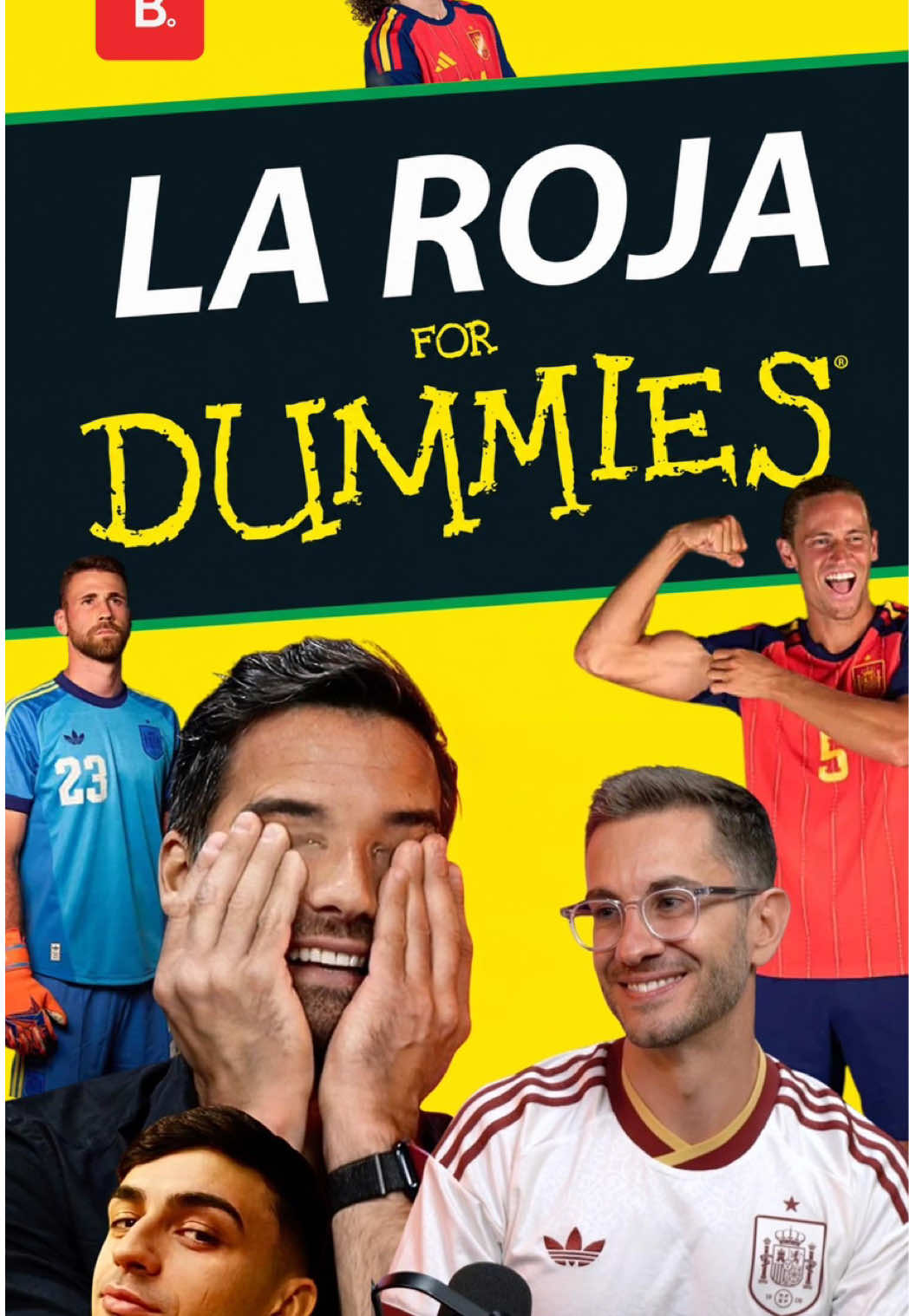
If you’re not following us on TikTok yet, you’re missing out. We’re posting exclusive content with our collaborators across Spain, breaking news updates, and pop culture coverage. Click on the post above and come hang with us!
🙏 Once again, please remember to share this newsletter with your friends on social media. The more we grow, the more information we’ll be able to offer each week.