
✝️ What's on in Madrid: March 27
The Holy Week begins, and it's a great chance for you heretics to get a taste of Jesus Christ.
Madrid | Issue #138
🇪🇸 The Bubble is Spain's #1 English-language, bestselling newsletter. We offer paid subscriptions, and we’d be thrilled to have your support!
Here Are 5 Things to Do in Madrid This Weekend
It’s Friday again!
And this is one of those weekends. First, many people you know are probably leaving the city (many of them are going back to their hometowns). Semana Santa is a big thing here, and everyone loves to take off.
Fortunately, those of us staying still have a lot of options. Are you into religious experiences? Then the processions are for you.
Not happy with the current state of the world and the slow decline of our democracies? Then you’ll probably be joining the No Tyrants protest this Saturday at the Puerta del Sol.
Just want to decompress at home, watch Netflix, and eat torrijas? We got you covered, too.
Semana Santa is that magical time of year when Madrid collectively slows down, reflects on its life choices, and briefly considers atoning for their sins.
For a few days, we trade chaos for incense, late nights for processions, and questionable decisions for going to Church.
We eat torrijas, fish and chocolate eggs, and then eventually come to the realization that no, we don’t need to atone. Hell of a week, though.
Happy weekend!
1. ⛪️ Madrid goes full Catholic for Holy Week weekend (Part 1)
Put on your Sunday clothes, heretics! Holy Week (aka Jesuspalooza) is back, which means that for a few days, Spain, a deeply Catholic country, becomes a humble nation devoted to humanity’s one true religion: consumerism.
It’s important to remember the premise of Semana Santa is actually false advertising (festivities take more than one week), but don’t let that get in the way.
From March 27 to April 5, Spain’s streets fill with incense, drums echo through historic districts, and at any given moment, you might even turn a corner and run into those guys who you think look like the KKK but are totally not the KKK (seriously, we’re tired of explaining it).
On today’s edition, we recommend what’s happening this weekend (Part 1), while next week we’ll tell you how to celebrate that He is risen by eating chocolate eggs.
Jesuspalooza, Part 1. Alright, let’s get down to business. Things properly kick off with stuff happening throughout the afternoon and well into the night, where you may get to see some of the most striking processions take over central Madrid.
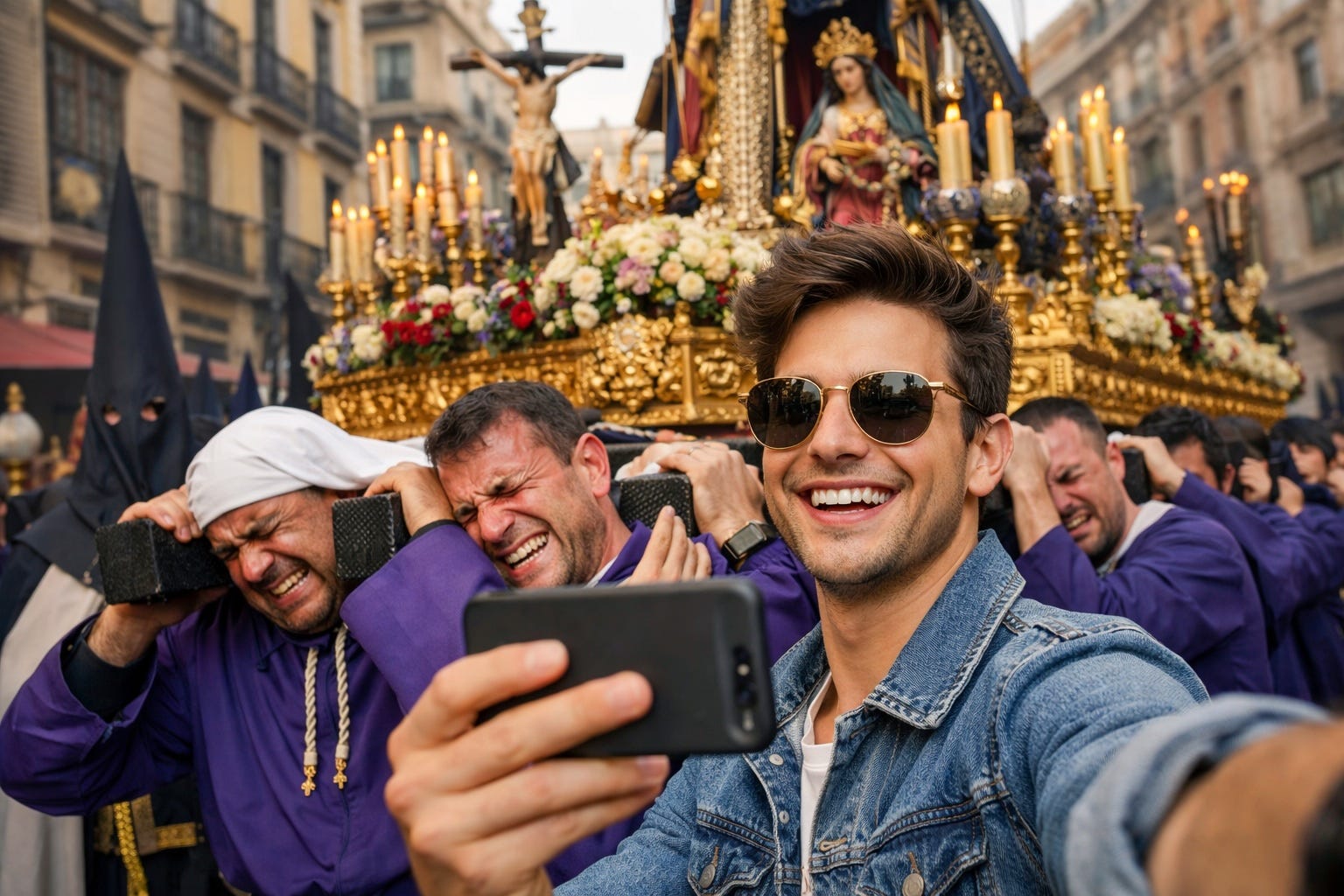
The brotherhoods, dressed in robes and those unmistakable pointed hoods 👀, will be carrying enormous pasos (ornate religious sculptures that look like they belong in a museum but are instead moving slowly through the streets for hours).
The atmosphere is serious, almost heavy (so be respectful), until suddenly it isn’t: out of nowhere, someone leans out from a balcony and sings a saeta, a raw flamenco-style lament directed at the procession below.
Saturday is when you start to understand what’s really going on. Yes, there are still processions (and plenty of them), but this is also the day to explore the quieter layers of Semana Santa.
Churches and cultural spaces open exhibitions of religious art, sculptures, and historical pieces that explain the visuals you’ve been watching in the streets. It adds context and makes the whole thing feel less random and more like a centuries-old performance that Madrid is still very committed to.
And then there’s the food, which deserves its own moment. This is peak season for the Ruta de los Dulces de Pasión, a city-wide excuse to eat your way through torrijas (Spain’s answer to French toast), pestiños dripping in honey, bartolillos filled with cream, and basically anything fried and covered in sugar. Wrong week to start your diet. Deal with it; resistance is futile.
By Sunday, the mood softens a bit. The processions are still happening, but the city feels more social. People move around more, hopping between neighborhoods. It’s the best day to go with the flow.
Processions: Over the weekend, some of the city’s most important processions pass through the Puerta del Sol. We’re talking about some serious heavyweights: the Cristo de Medinaceli, one of the most venerated figures in the city; the Cristo de la Fe y del Perdón by Luis Salvador Carmona; the Divino Cautivo by Mariano Benlliure; or the Virgen de la Soledad y Desamparo, a masterpiece by Juan Pascual de Mena.
If you want the “front row” version of all this, the city has you covered. A 600-seat viewing area is set up right in front of the Real Casa de Correos, turning Sol into something like a ceremonial theater. It’s free, first come, first served. The main event on Sunday; La Borriquita leaving from Almudena Cathedral, the Procesión del Silencio, and later the Cristo de la Fe y la Salud and Los Estudiantes, one of the most anticipated processions of the weekend. You can check it all out in the program above.
Saetas: A saeta is an Andalusian religious song that people sing from the balconies (when you least expect it). Fortunately for you, some of them are scheduled for this Palm Sunday, so you can go see (and listen) to them for free.
From the balcony of the Casa de la Villa (Plaza de la Villa, s/n, near the Ópera / Sol metro stations):
Saeta during the Borriquita procession. Around 4:30 p.m.
Saeta during the Silencio procession. Around 5:30 p.m.
Saeta during the Los Estudiantes procession. Around 6 p.m.
Organ music at the San Ginés Church: If you’re into the more safe classic stuff, head over to the San Ginés Church (Calle del Arenal 13) tonight for some live organ music.
March 27, at 6:30 p.m. (doors open at 6 p.m.). Saskia Roures, organ professor at the Higher Conservatory of Music of Castilla y León, will play works by Johann Sebastian Bach, César Franck, Elfrida Andrée, and Michael Radulescu
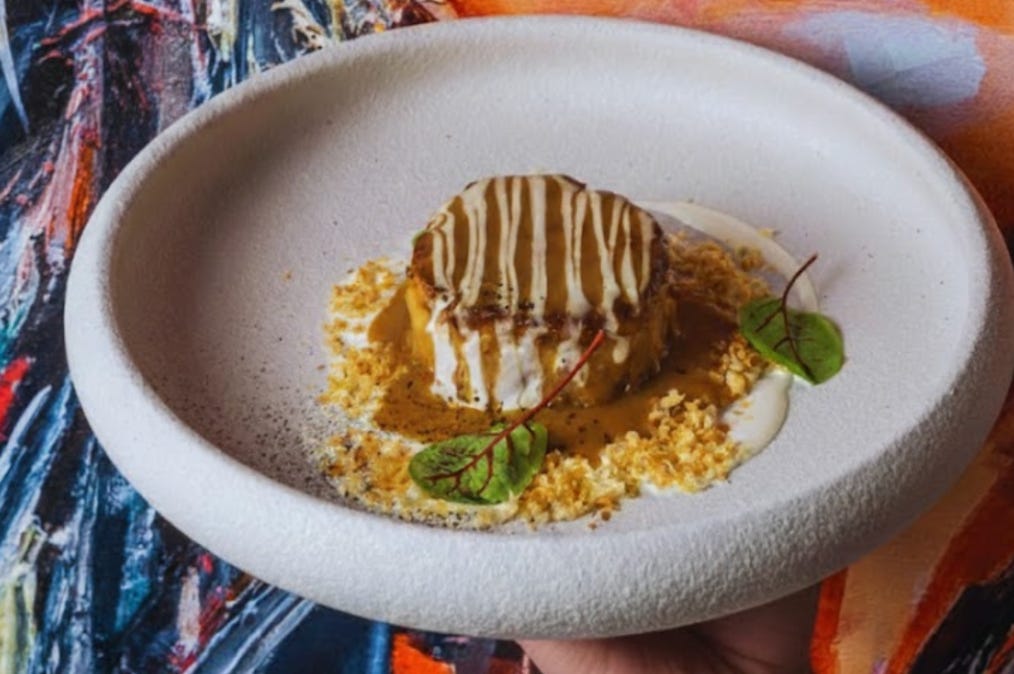
Ruta Dulces Pasiones de Semana Santa: The Ruta Dulces Pasiones 2026 food route turns the city into a full-blown tribute to the torrija, with bakeries, pastry shops, and restaurants offering everything from the classic version (milk-soaked, fried, and drenched in sugar or honey) to more experimental takes. Click on that link for a list of all participating bakeries and cafes in Madrid.
If you’re wondering what to eat besides torrijas to follow tradition, make sure you try Soldaditos de Pavia (an Andalusian tapa that’s fried cod wrapped in a slice of roasted red pepper), potaje de vigilia (a stew made with chickpeas, spinach, and cod, cooked slowly), and (of course), chocolate Easter eggs.
Semana Santa Craft Fair: The Feria de Artesanía de Semana Santa is back for its fourth edition and is taking over Paseo de Recoletos all the way up to Cibeles through April 12.
It’s the biggest showcase of local craftsmanship in Madrid, bringing together artisans from the city and across Spain to display and sell the result of months of work. There are ceramics, jewelry, textiles, glass, and leather.
That’s all for now. We’ll be back next week with the sequel, Jesuspalooza, Part 2: Jesus Lives!
2.🎈 Madrid gets a giant, inflatable reality check with Balloon Museum’s Euphoria
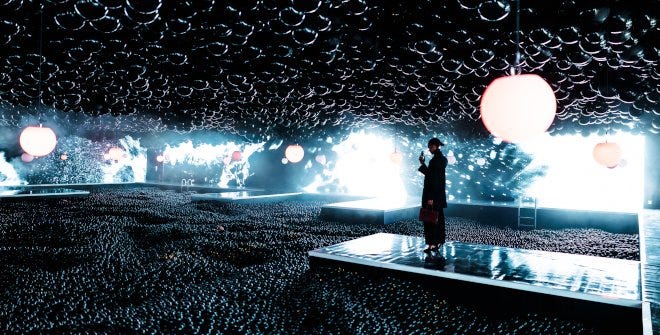
This has nothing to do with Zendaya’s HBO hit drama, despite its misleading name. However, if the whole Semana Santa thing feels a bit too solemn, this city has a backup plan for you: giant inflatable art.
Balloon Museum lands in the city with Euphoria – Art is in the Air, an exhibition that turns air into the main character and invites you to literally walk inside the artwork.
The show features 14 large-scale installations by big-name contemporary artists like Philippe Parreno, Martin Creed, and Rafael Lozano-Hemmer.
Remember that time you tried to touch one of the Goyas at the Prado, and you were almost arrested? Well, that’s not happening here. Because here, the whole point is interaction.
You move through it, play with it, and become part of it. The concept leans into something almost childlike (if you’ve always complained about the fact that only insufferable children seem to be allowed to enjoy inflatables, this is for you), but pushes it into something more conceptual: how we experience space, emotion, and art itself.
Bullshit, of course. You just want to play in there like a child.
But we digress. The project has already pulled in more than 7 million visitors in New York, London, and Paris, which tells you everything you need to know about its appeal.
🖥️ What: Euphoria: Art is in the Air (Balloon Museum immersive exhibition)
📍 Where: Paseo del Embarcadero, Recinto Ferial de la Casa de Campo, Madrid
📅 When: March 28 to Sept. 6
🎟 Tickets start at €15
3. 🔥 Jugar con Fuego: A 19th-century zarzuela gets reimagined as a contemporary football (aka soccer) drama
This city loves to take something deeply traditional and give it just enough of a twist to make you look twice. In this case, with one of the defining works of Spanish zarzuela.
Before you ask, a zarzuela is a Spanish lyric-dramatic genre that incorporates elements of opera, but makes it a bit more flexible, more local, and usually more fun.
Jugar con fuego (Playing with Fire) is a three-act show that is a landmark in the history of zarzuelas. It originally premiered in 1851 with a libretto by Ventura de la Vega and music by Francisco Asenjo Barbieri, and it was such a hit that it became the most performed title in Spain for years.
However, in this new version directed by Marina Bollaín, don’t expect a classic period-piece revival. While at its core, it’s a comedy of entanglements and chaos, Bollaín’s version relocates it somewhere unexpected: a football stadium.
The action unfolds in VIP boxes, corridors, and shared spaces where the city’s elite brush up against hooligans, fans, and other weirdos.
It’s a clever shift that makes the story feel surprisingly current. It deals with power dynamics, class divides, and social performance, all playing out in a setting that Madrid understands very well.
🖥️ What: Jugar con fuego (zarzuela in three acts, directed by Marina Bollaín)
📍 Where: Teatro de la Zarzuela, Calle de Jovellanos 4, Madrid
📅 When: Through April 12
🎟 Tickets start at €5
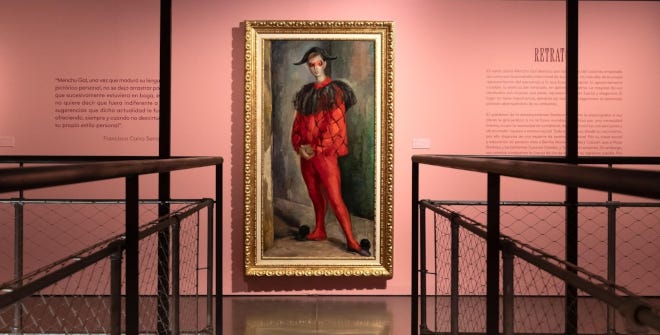
4. 🎨 Madrid reclaims a forgotten pioneer with Menchu Gal retrospective