
🙏 The Pope does Spain
Plus: Paranoia over Madrid's favorite beverage and the curtain falls on the trial of Sánchez's bro.

Madrid | Issue #150
🚨 The Bubble is Spain's #1 English-language newsletter. We offer paid and free subscriptions (which you can customize). Or interested in sponsorship opportunities?Click here to find out how to book a spot.
Hallelujah!
🇻🇦The Pope gave a speech and somehow every politician agreed with him
Holy week. Fifteen years after the last papal visit, Pope Leo XIV landed in Spain on Saturday morning with a full-blown, high-octane tour that feels like a religious roadshow that could compete with Bad Bunny.
Party! From a massive open-air mass in Plaza de Cibeles (1.5m attendees!) to the hair-raising, waterworks-inducing blessing of the iconic Sagrada Familia last night, and now heading to Canary Islands migrant centers, the pope’s been busy with spectacle, symbolism, and politics.
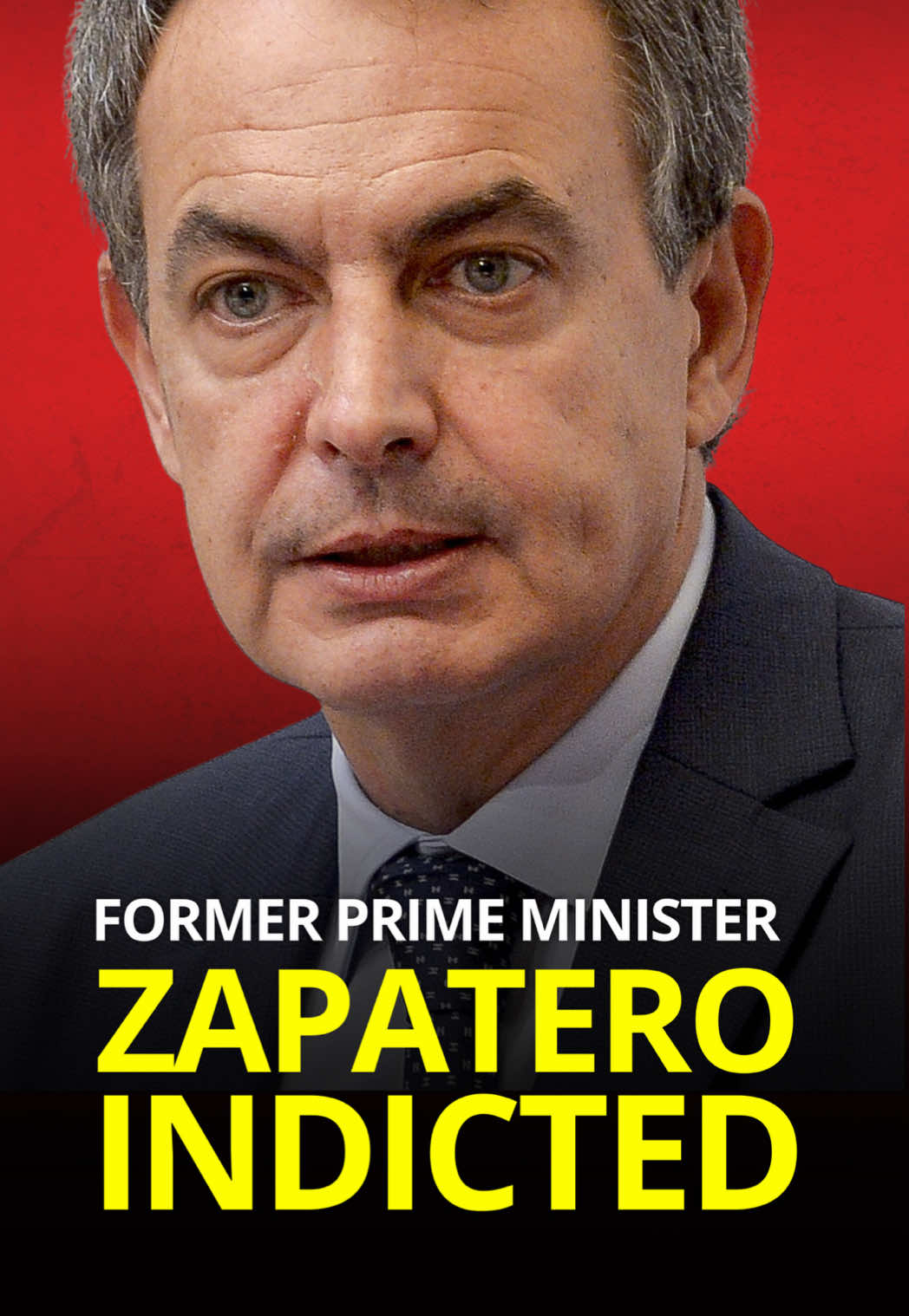
Thank god for a break. For Prime Minister Pedro Sánchez, the pope’s visit couldn’t have come at a better time. With legal troubles and corruption cases swirling around him and pals like former PM José Luis Rodríguez Zapatero, the papal tour frenzy shifted the spotlight (if for only a minute).
Guess who. It was on Monday that Madrid witnessed something close to a miracle: the pope delivered a historic speech in Parliament, and every major political party walked away claiming, somehow, that he was basically on their side.
You guys agree? In a chamber better known for screaming at each other than agreement on anything, MPs from across the spectrum applauded for over seven minutes.
Even more surreal? Center-left PSOE, center-right PP and far-right Vox all insisted the Pope’s message aligned with their own political platforms. For real?
Listen up, sinners. The pope’s 30-minute speech (see above) itself was anything but neutral. Leo XIV touched on some of the most divisive issues in Spanish politics: immigration, abortion, euthanasia, education, war, and the toxic tone of public debate. If he didn’t opine on onions in tortilla de patata, it was probably due to a lack of time.
On immigration, he was crystal clear. This is not a numbers game but a moral issue, calling for dignity, legal pathways, and integration.
But… on the other hand, he doubled down on the Church’s traditional stance that life must be protected “from conception to natural death,” clashing with Spain’s loose laws on abortion and euthanasia.
He also defended parents’ rights in education (a nod to religious schooling), warned about the dangers of AI, and called out the increasingly aggressive tone of political discourse. Disagreement, he said, should not mean humiliation. (We all can agree with that, right?)
Choose your own adventure. The reaction from politicians was a masterclass in selective listening. As it turns out, everyone agreed on one thing: no one felt criticized! On the contrary, political leaders, right and (mostly) left, seemed to think that His Holiness agreed with them and only them (which is obviously absurd).
Hits for everyone. The right was most directly confronted on immigration, peace, and international law, areas where the pope’s stance clashes clearly with both the PP and Vox. The left didn’t get off easy either, facing a head-on challenge on abortion, euthanasia, and education. Even nationalist parties caught a subtle jab, with Leo XIV emphasizing unity over division.
The PP. Boss Alberto Núñez Feijóo said he felt like the pope spoke directly to him, insisting the speech fit perfectly with the PP’s humanist roots.
Vox. Party leader Santiago Abascal also saw no contradiction with his party’s stance on immigration (despite the pope explicitly condemning the kind of “national priority” logic that Vox promotes).
PSOE and the left, led by PM Sánchez, highlighted the parts about international law, migration, and human dignity they agreed with, brushing past the pope’s clear opposition to some of their flagship social policies.
🙉 Everyone agreed. Because of course. The whole thing was political projection at its finest: take what you like, ignore the rest, and declare yourself the pope's #BFF. So who actually took the biggest hit? The answer is: pretty much everyone.
More news below. 👇👇
🔔 But first… The Bubble Podcast is back for season 2!
In the first episode of this season, we discuss PM Zapatero’s corruption accusations, the very complicated relationship between the US and Spanish governments, and the World Cup. Find us on Spotify, Apple Podcasts and YouTube!
💬 Five things to discuss at dinner parties
1. 👩🏻⚖️ Sánchez’s ‘beloved brother’ case is done except for the crying ruling
The best part of any court case? The closing statements, where each side blasts the other’s case and indulges in some theatrical badassery. That’s what we got this week as hearings wrapped in the trial of PM Sánchez’s hermanísimo David and the bullshit patronage job he was — or wasn’t — given in Badajoz (we wrote about this last week).
The accusers went first. Lawyers for the various right-wing parties and lobbies called the creation of a “made-to-order” post for David a “farce”, said his “complete sham” of an interview for the position “never took place,” and that his “only merit” for holding the job was being “Pedro Sánchez’s brother.”
The defendants were cutting. Miguel Ángel Gallardo, the former leader of the PSOE in Extremadura who faced trial for the supposedly illicit hiring of David, said his only crime was “not having the same ideas as the accusers” and that he’d already been “condemned socially”. Defense lawyers called the case “a house of cards,” and the plaintiff claims “a fictional script...devoid of the slightest sense.”
Now the screaming is done, and the case goes to the tribunal. Here are 5 issues to watch as you await the ruling:
Police report vs. people. The UCO analyzed thousands of emails and concluded the job was “predetermined” for David — pointing to Gallardo as the engine. But many of the 53 witnesses — and the state prosecutor — said otherwise. Who wins: one police report or half a courthouse of witnesses — mostly with ties to the PSOE?
David vs. David. His instruction-phase testimony was a slow-motion car crash: he couldn’t locate his own office, left 10-second silences, and rambled about his job title. His lawyers nearly silenced him at trial. The old videos were played in court anyway. Can his past self convict today’s David?
That “Hermanísimo” email. An email sent the day the job was posted — subject line: “Hermanísimo” — was the prosecution’s marquee exhibit. In court, its author walked it back to “a rumor I can’t source.” The tribunal’s president all but dismissed it. So, evidence or just a meme?
The ghost of Pedro. Five emails allegedly sent to Pedro’s personal account (but actually, it seems, to the account of his father, who has the same name) were unveiled at the last minute — with one plaintiff claiming they were deliberately left uninvestigated by the UCO after it was told to “stand down” by… the government 🤔? There are no charges against Pedro himself, but the accusation that political pressure shaped the investigation hangs over the whole thing.
Prosecution vs. prosecution. The state prosecutor asked for the acquittal of all 11 defendants. The right-wing groups want 6 years for David. Defense attorneys formally asked the court to make the accusers pay costs for “procedural bad faith.” Whoever loses won’t be quiet about it.
Tick-tock. The ruling could take until after August — no one is in pretrial detention, so the court has no urgency. Spain will have to wait.
2. 💎 A priest walks into a bar jewelry store
Wasn’t the Pope’s visit stirring? Well, apparently average Spaniards and politicians of all stripes weren’t the only ones to take inspiration from Leo XIV’s tour of Spain. But for some, it didn’t go so well.
What happened: The Policía Nacional arrested seven people for the holdup of a Madrid gold shop yesterday afternoon. Three of the gang entered the store: two — dressed as a priest and a nun — asked an employee to show them a jewelry display, while the third violently forced her into the back room.
Police caught them as they fled. During the arrest, the “priest” pulled a gun on two officers and had to be subdued. The costumes, police noted, were “not of very good quality.” The commitment was there. But the craft? Um, less so.
Not a one-off. This was Madrid’s sixth jewelry robbery in a month, all brazen, all in daylight, all apparently unconcerned with cameras or bystanders. A brief tour:
May 15: A gold shop in Torrejón de Ardoz was robbed by five people who tricked an employee into opening the door. Estimated haul: €500,000.
May 18: Four masked robbers hit a Puente de Vallecas shopping center with hammers, stuffing loot into raffia bags.
May 22: A man and woman entered a jewelry store on Calle Toledo with a gun — which they left behind and turned out to be fake — pistol-whipped the owner in the head, and fled with the loot. At least she’s okay.
June 2: Three hooded figures in military gear hit the José Luis chain at La Vaguada — Madrid’s first shopping center — making off mainly with Casio and Guess watches. Not exactly the crown jewels.
June 8: Four more hit José Luis again in Torrelodones, this time with what witnesses described as a submachine gun.
The suspects. All seven arrested yesterday are Peruvian nationals. Two were picked up nearby as lookouts; two more were caught in a getaway car on the M-30, which crashed into a police vehicle. All face charges of robbery with violence and intimidation. Police are investigating whether they’re linked to the other recent robberies.
New duds. As far as we know, this is the first time they dressed as men (and women) of the cloth. The Pope truly has inspired us all.
3.🚰 Madrid’s devastating water crisis: the city’s source of pride suddenly tastes ‘funny’
Madrid, what a town! It has a lot of things going for it, but one of its quiet superpowers has always (always!) been its tap water. Ask any local, and they’ll tell you that it’s the best drinking water in the world, hands down. No comparison.
Seriously, you should never criticize Madrid tap water unless you want to make madrileños very angry. So when water suddenly started smelling and tasting weird this week, people did more than notice. They
worriedabsolutely freaked out.
It started Sunday morning. All over the city (and beyond), people took their first sip of the day and immediately knew something was afoot. Social media exploded. Some said it tasted like chlorine, others like plastic, and others compared it to hospital water or even to drinking from a garden hose.
Considering this is a city where 96% of people proudly drink straight from the tap, this was borderline identity crisis territory.
So what’s going on? According to Canal de Isabel II (the public company that manages Madrid’s water), the culprit was relatively boring mundane: a filtration adjustment gone wrong.
Calm down, everyone. It was neither deadly nor dangerous (we hope). It was just that a maneuver involving activated carbon filters at the Santillana treatment plant altered the taste and smell of the water.
Don’t drink the Kool-Aid. While this may have sounded like the beginning of one of those weird plans concocted by comic book villains to murder thousands, experts say the reason people noticed so quickly is actually a compliment.
Madrid’s water is famously “soft” (low mineralization), light, and clean-tasting, thanks in part to the granite terrain of the Sierra. So when something changes, even slightly, it’s immediately obvious.
Some blame increased chlorine levels, possibly due to higher demand (hello, Pope + Bad Bunny!), which may have amplified the effect.
Still, authorities insist the water was completely safe to drink. By yesterday, the issue had begun to disappear as the system flushed itself out.
The end of the (non) crisis didn’t stop many madrileños from temporarily switching to bottled water (a move that felt almost sacrilegious). It also didn’t stop political parties such as Más Madrid from demanding an explanation.
Because water in Madrid is holy, and not because the pope was in town.
4. 🚆 Party! Fiesta! The youths get to travel for almost free
They may never be able to buy a home, or have a career not cut short by AI, or find love in the era of smartphone addiction, but at least the youngs have one thing going for them: They can travel across Spain for damn near free this summer! Hey, at least it’s something 🤷.
What it is. Now in its fourth year, Verano Joven hands out heavily discounted travel passes to anyone aged 18-30 (Spanish national or legal resident) for trips between July 1 and Sept. 30. The government has set aside €130 million this year — €10 million more than last year.
The discounts. 90% off regular state buses and medium-distance trains. 50% off high-speed trains (Renfe, Iryo, Ouigo), capped at €30 per ticket. 50% off Avant. And 50% off a 10-day Interrail Global Flexible pass — so the party can extend to the rest of Europe too.
How to get it. Register on the Verano Joven website (not live yet — coming “in the next few days”) with your DNI or NIE. You’ll get a personal code to use on each operator’s own site. Non-transferable, so don’t try to share it with your roommate or, like, mom.
The numbers. The program has racked up 4 million users and 16 million discounted trips across its first three editions, with 2025 setting records: 6.8 million trips, up 30% from 2024.
Transport minister Óscar Puente called it “one of the public policies that has worked best” (shocking how free money is popular) and noted that young people’s desire to travel is “inversely proportional to the money they usually have in their pockets.” Correct, ministro.
Also, it has the nice effect of distracting them from all the world’s other problems. Come to think of it, maybe you could do the same for those who’ve passed 30? (Just asking for a friend.)
5.💊 We're not just a top holiday destination — we're also Europe’s main drug gateway!