Five places to turn August 12 into a proper day trip (plus the Asturian coast’s extra seconds of darkness, the safety rules you really cannot ignore and a backup eclipse for chronic procrastinators!)
Madrid | Special Eclipse Issue |🇪🇸 The Bubble is Spain’s #1 English-language newsletter. We offer paid and free subscriptions (which you can customize). For sponsorships, click here.
Spain is about to switch off the lights (fear not, this is not another apagón).
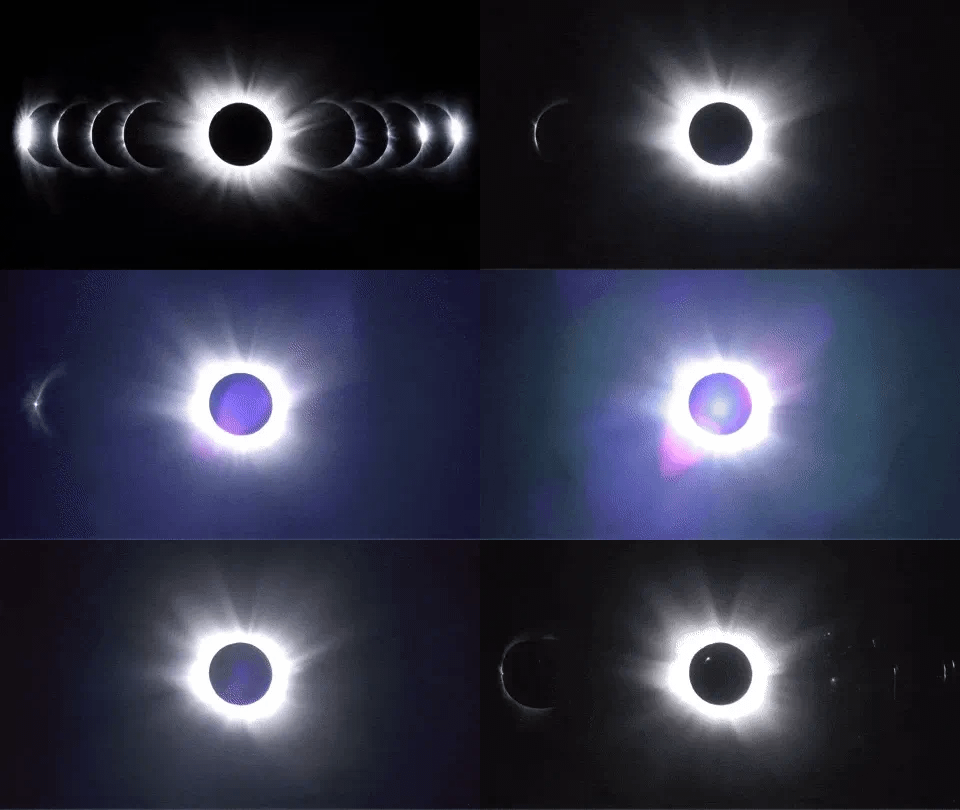
On Wednesday, August 12, the Moon will slide in front of the Sun and, for a narrow strip across northern Spain, daytime will briefly become night.
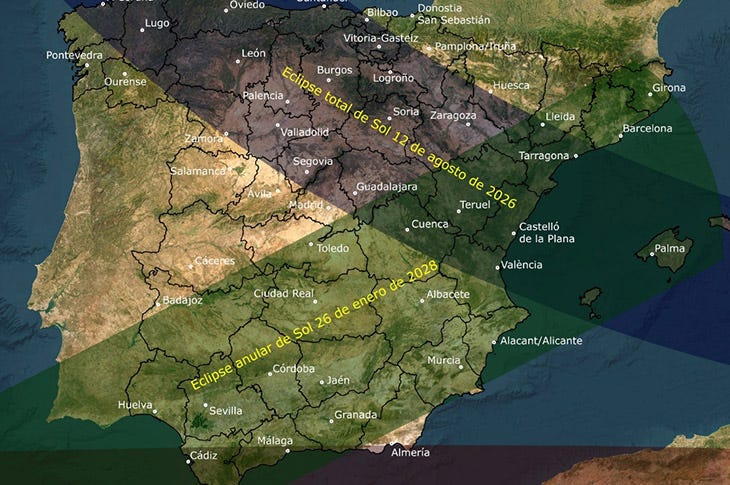
Now, this is not your average “the sky looks a bit weird” eclipse. It will be the first total solar eclipse visible from mainland Spain in more than a century (the Iberian Peninsula has not seen one since 1912). The path of totality will enter through Galicia, cross northern Spain and reach the Balearic Islands just before sunset.
This all sounds wonderfully cinematic. It also means half the country will be trying to park on the same hill.
The partial eclipse begins at roughly 7:30 p.m. in the places below, with totality arriving around 8:28–8:29 p.m. Exact times vary by location and even by the coordinates you choose within a municipality, so use the Instituto Geográfico Nacional’s official eclipse viewer before setting out.
One more thing: the Sun will be low in the sky. A famous viewpoint is useless if a mountain, apartment block or badly positioned pine tree is sitting on the western horizon. Treat the spots below as starting points, check local access plans and closures, and scout your exact view in advance if you can.
Do you already have plans for the eclipse? Tell us where you’ll be watching in the comments. Your plan might help another reader find the perfect spot, or persuade them to stay very far away from yours!
Here are five places where the eclipse can become a full-day affair:
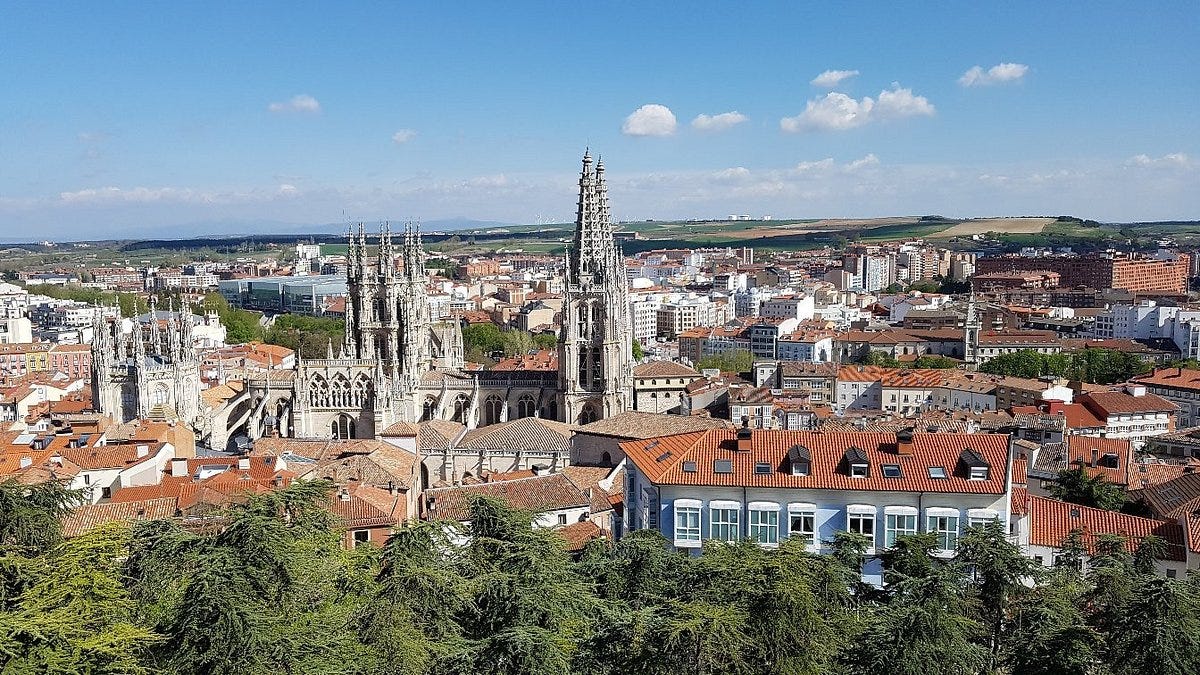
1. 🏰 Burgos: Cathedral, morcilla and 104 seconds of darkness
📍 Where: Mirador del Castillo
Burgos offers a very respectable 1 minute and 44 seconds of totality, and the elevated Mirador del Castillo gives you a sweeping view over the city. The eclipse begins at about 7:33 p.m., reaches totality around 8:29 p.m., and does so with the Sun only around eight degrees above the horizon.
Before looking up: Start with Burgos Cathedral, wander through the historic center and order some morcilla de Burgos. Then make your way uphill well before the main event. This is an obvious viewing point, which means everyone else has probably had the same idea.
⏰ When to arrive: Before 7 p.m.—earlier if local authorities announce capacity limits.
💬 Bottom line: The easiest option for turning the eclipse into a handsome city break, provided you secure an unobstructed view to the west.
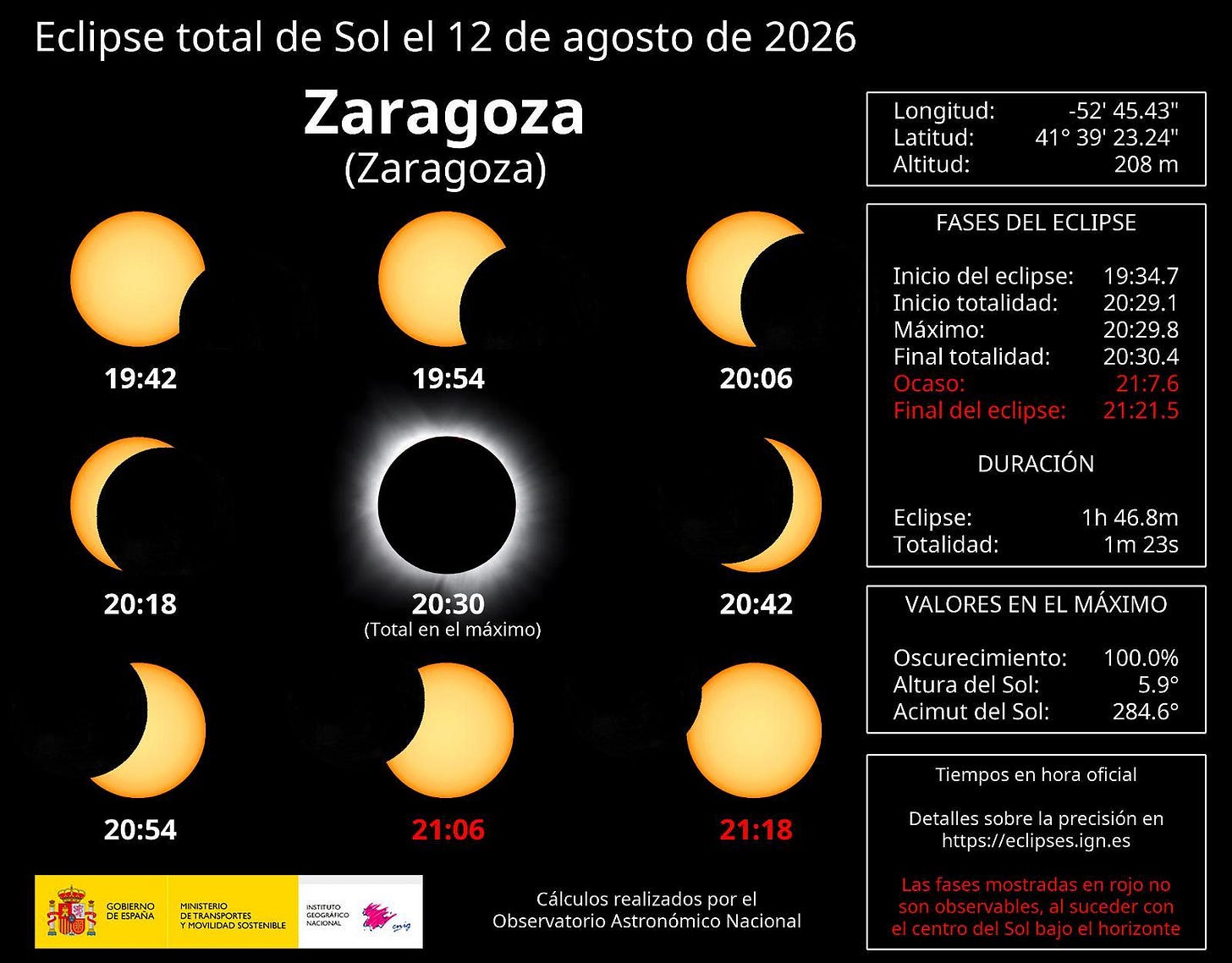
2. 🌾 Zaragoza: Trade the city crowd for the Murallas de Grisén
📍 Where: Acueducto del Jalón, also known as the Murallas de Grisén, between Alagón and Grisén
Zaragoza gets around 1 minute and 24 seconds of totality, with the maximum arriving at approximately 8:29 p.m. The Acueducto del Jalón sits roughly 25 kilometers outside the city, giving this option a rural setting and a compelling piece of 18th-century engineering as a backdrop.
Before looking up: Visit the Basílica del Pilar and Aljafería Palace, then eat your way through El Tubo. Ternasco de Aragón or migas should keep you going through the long wait. Afterward, head out toward Grisén with more time than Google Maps says you need.
⏰ When to arrive: By 7:15 p.m. at the latest, allowing extra time for traffic, parking, and the walk to your chosen observation point.
💬 Bottom line: A good escape from central Zaragoza—but verify permitted access and the western sightline before committing. “It’s in the countryside” does not automatically mean “the horizon is clear.”
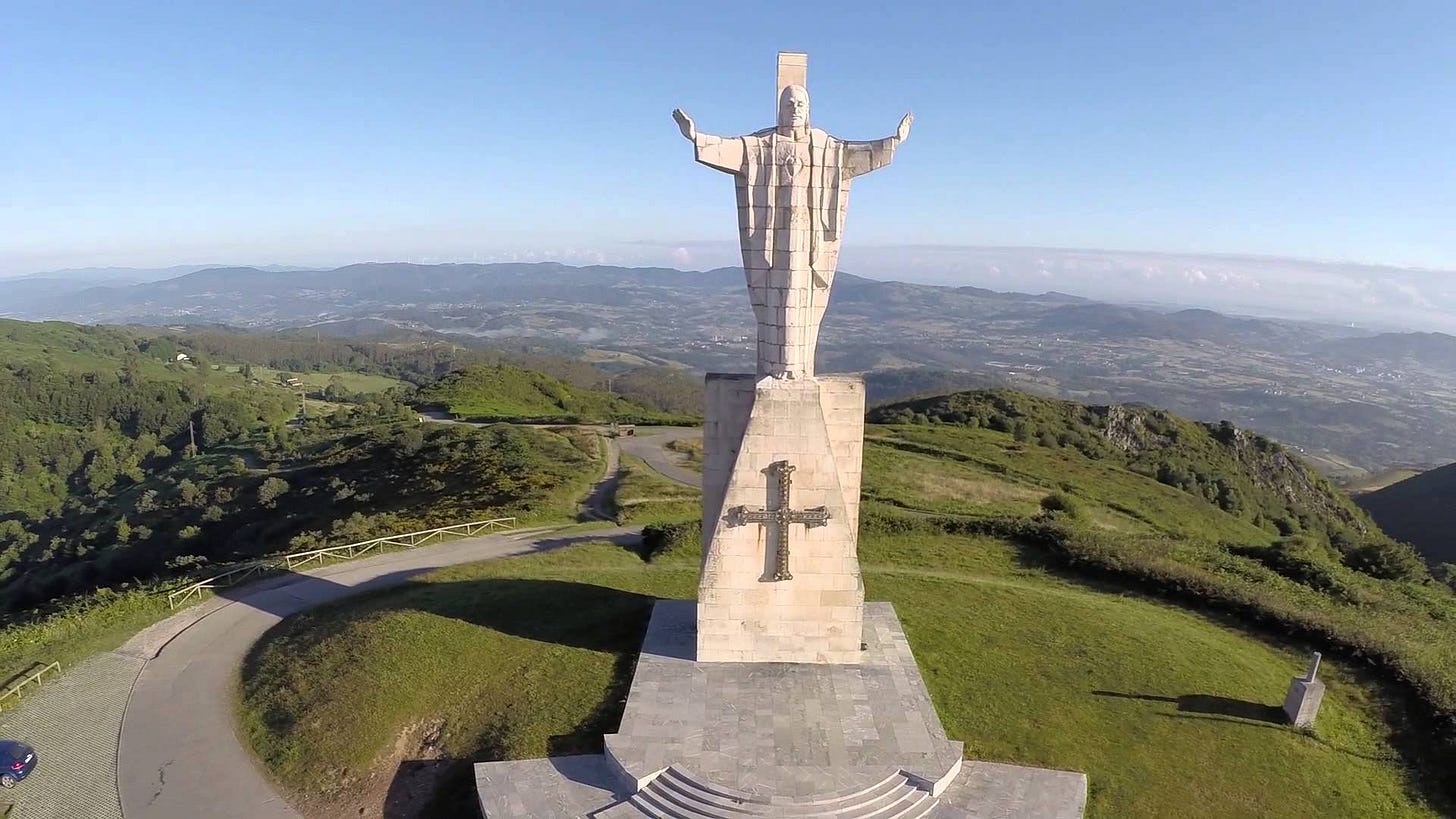
3. 🍎 Oviedo: Watch the sky go dark above Monte Naranco
📍 Where: Monte Naranco
Oviedo is one of the strongest city options on the route, with around 1 minute and 49 seconds of totality at approximately 8:28 p.m. Monte Naranco’s height and broad views make it an intuitive choice—weather permitting, which is the most Asturian disclaimer imaginable.
Before looking up: Visit Santa María del Naranco and San Miguel de Lillo, then head into Oviedo for cider and fabada. Just do not leave the climb until the last minute: road controls, limited parking and crowds may change how the mountain is accessed that afternoon.
⏰ When to arrive: Before 6:30 p.m., or follow the timetable of any official event or shuttle announced locally.
💬 Bottom line: Nearly the longest totality in this guide, plus pre-Romanesque architecture and cider. Clouds are the wild card.
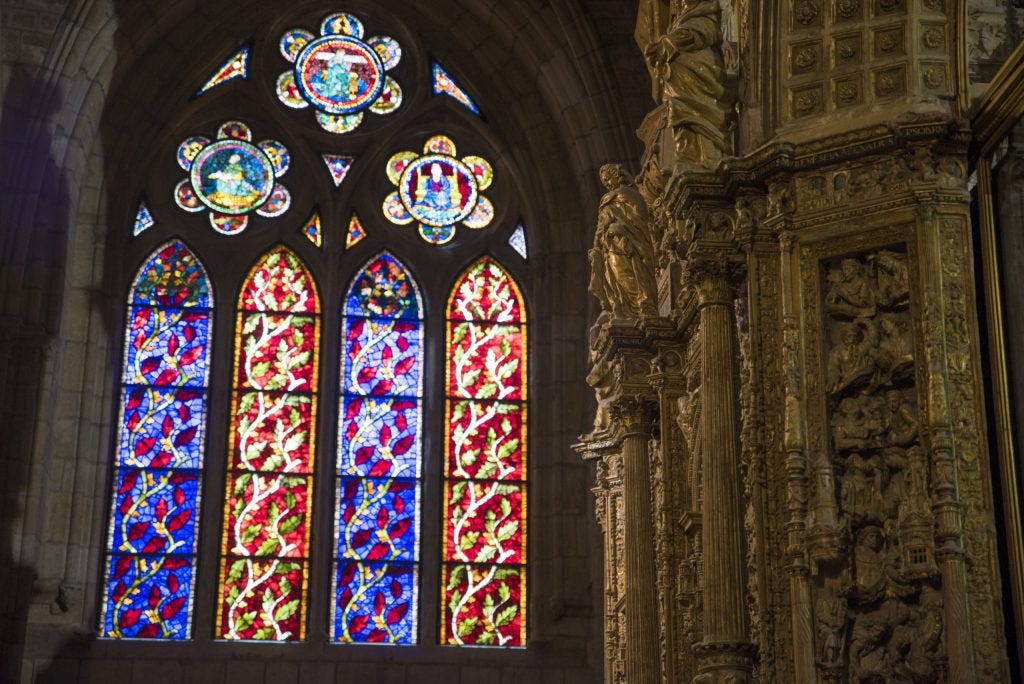
4. 🥩 León: Earn the view from Las Lomas
📍 Where: Las Lomas hike, or Depósitos de Cantamilanos, Reino de León shopping center, La Candamia in the city.
León should get roughly 1 minute and 44 seconds of totality, with the main event around 8:28 p.m. Las Lomas, outside the city, offers panoramic views over León, but reaching the viewpoints involves walking on an uneven path; this is not the moment for optimistic footwear.
Before looking up: Explore the old town, visit León Cathedral, and try cecina or botillo before heading toward La Candamia and starting the walk.
⏰ When to arrive: Before 6:30 p.m., leaving enough daylight and time to reach your spot without rushing.
💬 Bottom line: A beautiful, active option for people willing to hike for the view. Confirm the route, accessibility, and sunset direction in advance.
5. 🌊 A Coruña: Totality with an Atlantic backdrop
📍 Where: Monte de San Pedro
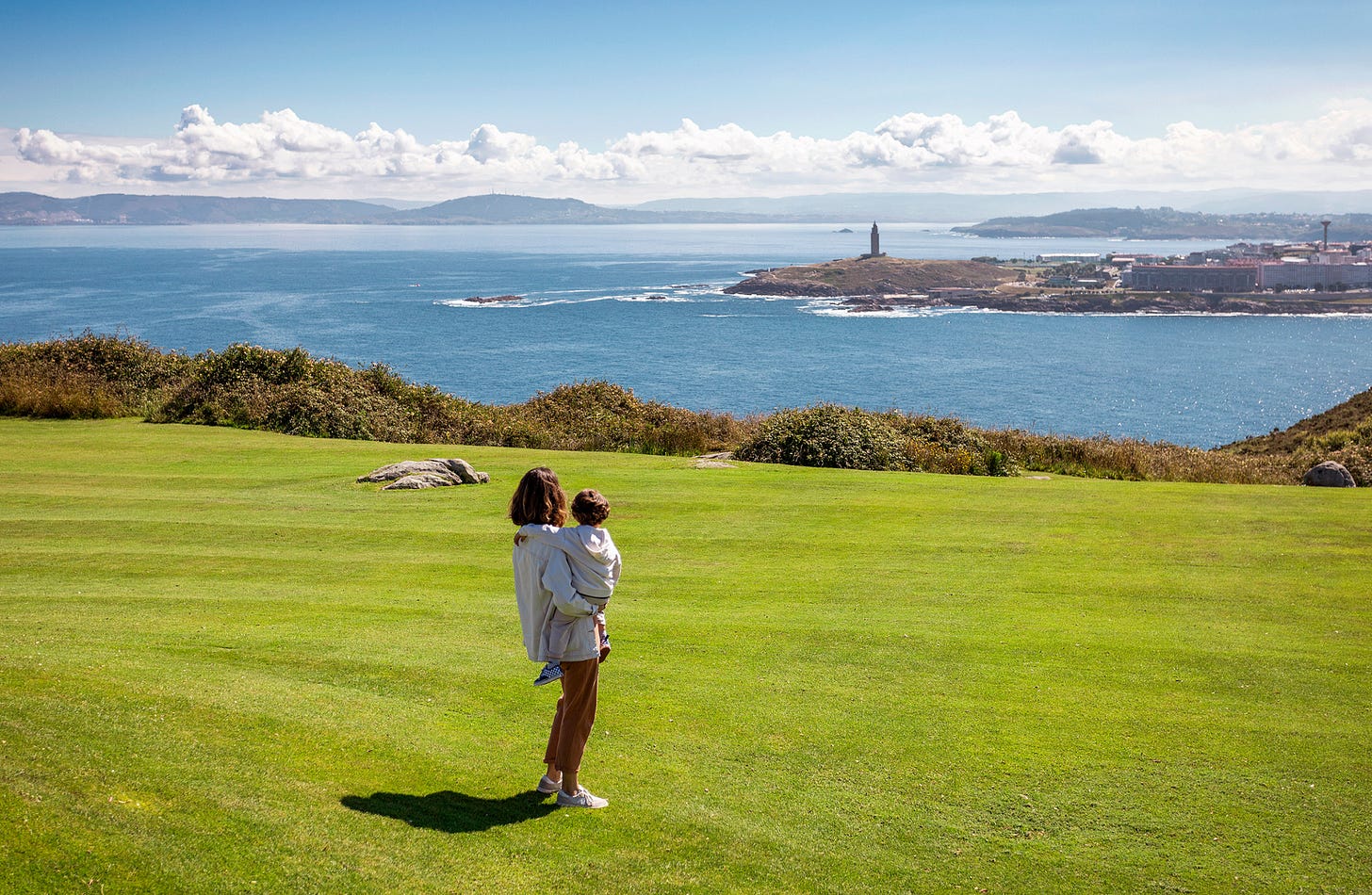
In A Coruña, the eclipse begins at about 7:31 p.m., totality arrives around 8:28 p.m., and the lights stay out for roughly 1 minute and 16 seconds. Monte de San Pedro’s ocean-facing position gives it the most dramatic Atlantic setting on this list, and makes it an extremely obvious magnet for crowds.
Before looking up: Walk the seafront, visit the Tower of Hercules and eat enough Galician seafood to make the trip worthwhile even if a cloud appears at exactly the wrong moment. Pulpo á feira is never a bad contingency plan.
⏰ When to arrive: Before 6:30 p.m., subject to the access and crowd-control plan announced by the city.
💬 Bottom line: Fewer seconds than Asturias or Burgos, but arguably the best backdrop. Please note that an earlier slide circulated with this guide gave 6:27 p.m. for totality; the correct time is around 8:28 p.m.
🌑 The Asturias cheat sheet: Where darkness lasts longest
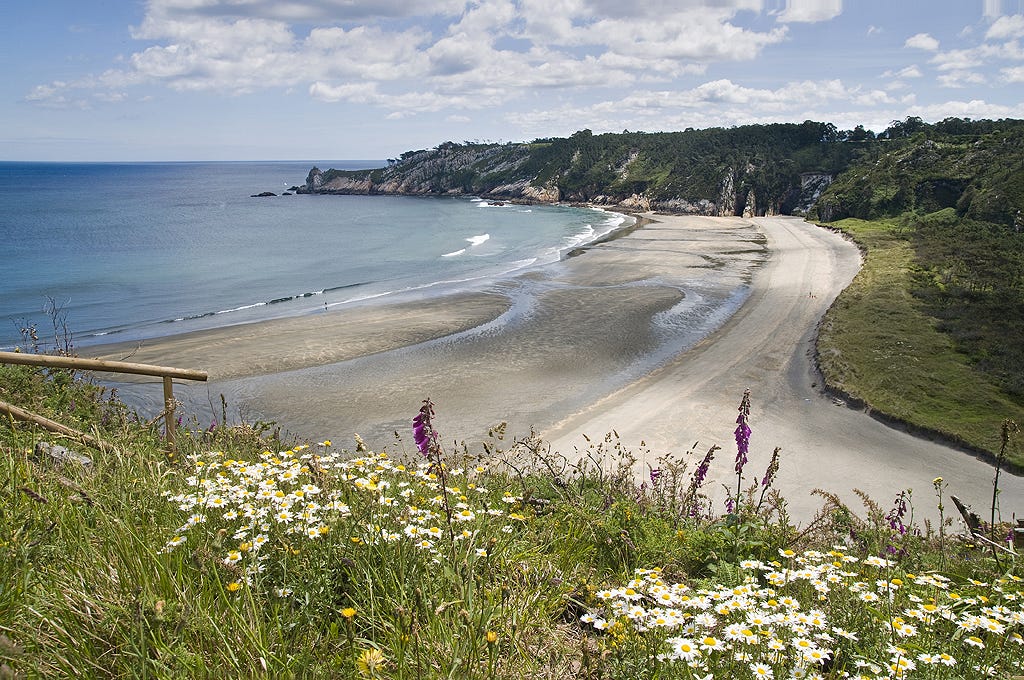
If your sole objective is squeezing every possible second out of the eclipse, head west from Oviedo.
According to the IGN data supplied for four western Asturian municipalities, Coaña, El Franco, Navia and Valdés each get about 1 minute and 50 seconds of totality. Their timings differ by tenths of a second, not by anything a human being standing in a field will notice.
So which is “best”? Whichever has clear skies, a genuinely open western horizon and a sensible access plan on the day. A two-second theoretical advantage is worthless if you spend totality behind a cloud, or in a traffic jam outside the car park.
Coaña: Pair the eclipse with the Castro de Coaña, one of Asturias’ best-known hillforts.
ElFranco: Make a coastal day of it around Viavélez or the cliffs and beaches near Porcía.
Navia: An easy base for food and services, with the estuary and western coast nearby.
Valdés: Combine the trip with Luarca, its harbor and a suitably dramatic section of coastline.
Do not assume that every beach faces the right way or offers safe capacity. Wait for municipal viewing areas and traffic measures, then use the IGN viewer to check your exact coordinates.
😎 A quick note about keeping your eyesight
The eclipse is special. Your retinas are irreplaceable. The official guidance is straightforward:
Never stare at the Sun during the partial phases. The reduced light can feel less uncomfortable while the radiation is still capable of causing permanent damage—and the retina does not warn you with pain.
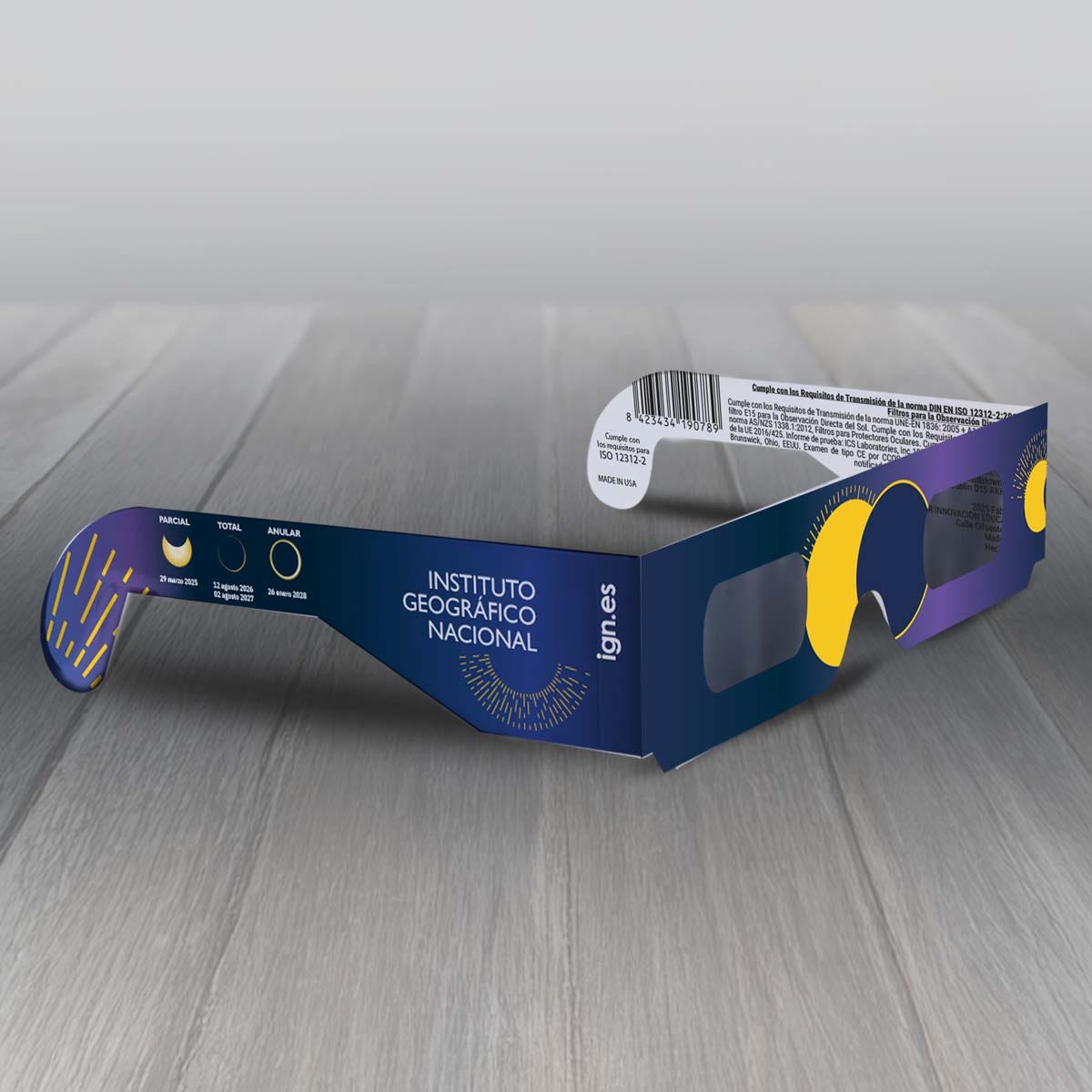
Use purpose-made eclipse glasses that meet ISO 12312-2:2015, and check that they are not scratched, punctured, torn or bent. Ordinary sunglasses do nothing here.
Do not improvise filters with X-rays, CDs, smoked glass, photographic film or similar internet folklore.
Do not look through binoculars, telescopes or camera viewfinders unless the equipment has the correct professional solar filter fitted at the front. Eclipse glasses alone are not protection against magnified sunlight.
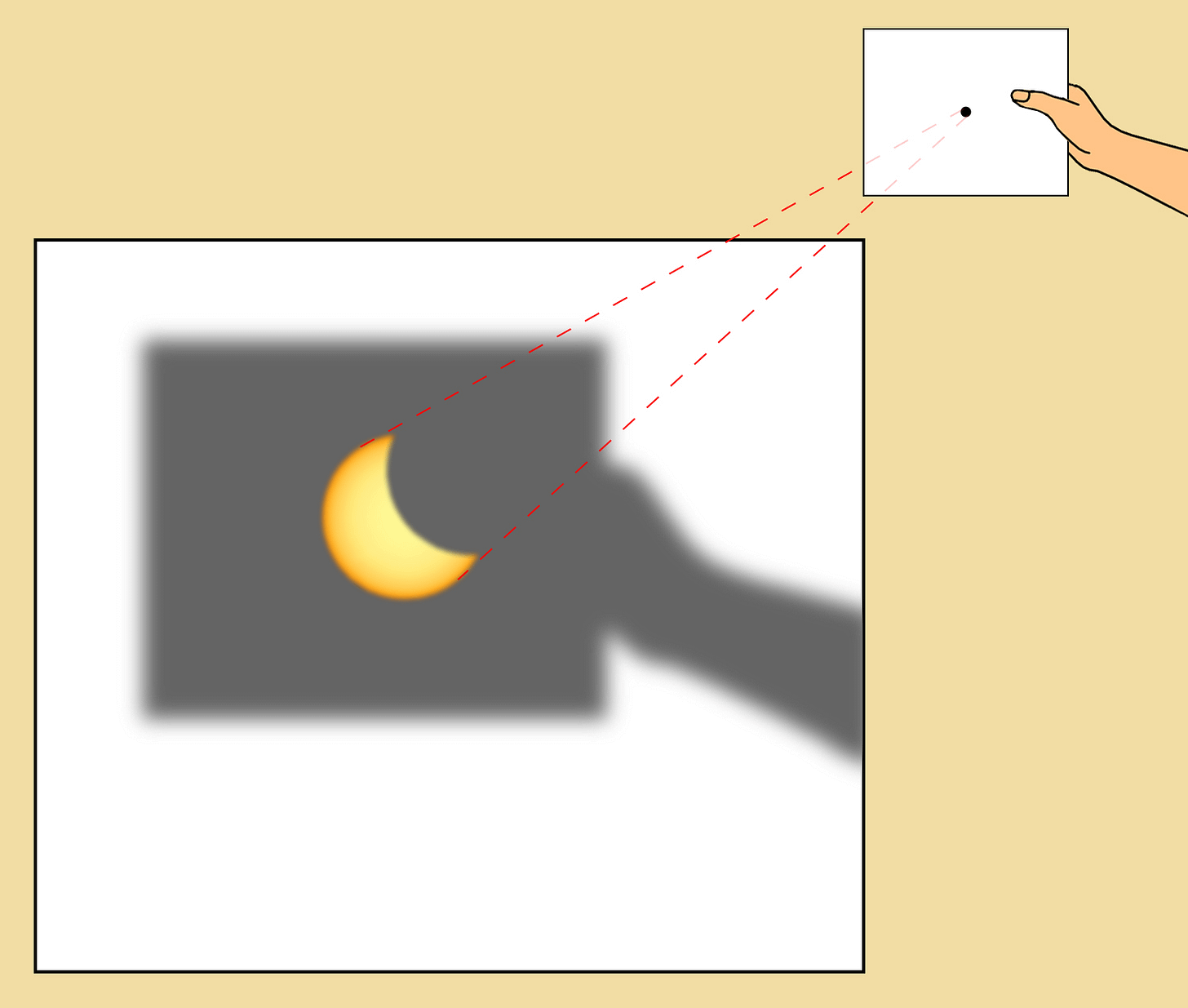
Projection is the safest low-tech alternative. A simple pinhole projector or camera obscura lets you watch an image of the Sun on a surface without looking at it directly.
Only during confirmed totality may observers inside the path of totality view the fully covered Sun without eclipse glasses. Put them back on before the first bright edge of sunlight reappears. If you are uncertain, keep them on.
The government’s most useful advice is less cosmic and more logistical: plan ahead.
Choose an elevated location with a clear western horizon; the Sun will be low at totality.
Check the forecast in the final days and keep a realistic backup location.
Avoid improvising a journey on eclipse day. Use public transport where possible, follow DGT and Protección Civil instructions and leave far earlier than feels necessary.
Bring water, snacks, sun protection, a charged phone and your eclipse glasses.
Consider waiting after totality instead of joining the immediate traffic exodus. Conveniently, the eclipse falls near the peak of the Perseids and under a new Moon, so hanging around after dark may deliver a second show.
The IGN has more practical travel and observation recommendations here.
🙅 What if you hate crowds, or missed it?
Good news: Spain is entering its eclipse era.
On August 2, 2027, a second total solar eclipse will cross the Strait of Gibraltar in the morning. In Europe, totality will only be visible from southern Spain: Ceuta and Melilla, almost all of Cádiz province, much of Málaga and the southernmost parts of Granada and Almería.
Ceuta gets Spain’s longest totality, at about 4 minutes and 48 seconds; Melilla gets roughly 4 minutes and 34 seconds. The rest of Spain will see a partial eclipse. In other words, start looking at refundable accommodation now, not the evening before.
Then, on January 26, 2028, an annular eclipse will cross roughly half the country from southwest to northeast. This is the “ring of fire” version (not related to Game of Thrones, you geek): the Moon will not cover the entire solar disc, so protective eyewear remains necessary throughout.
The annular phase will be visible across much of Andalucía, southern Extremadura, Castilla-La Mancha, parts of Madrid and Aragón, Murcia, the Comunitat Valenciana, parts of Catalonia and the western Balearic Islands. Once again, it happens close to sunset, so the western horizon matters.
After that, the IGN says Spain will not see another total solar eclipse until 2053. (Suddenly booking that rural hotel eleven months early feels less dramatic, right?)
Whatever you choose, do not spend the entirety of the eclipse fighting with your phone camera. Look up (safely) for a minute. The internet will have better footage by dinner.
🙏 Please remember to share this newsletter with the friend who still thinks normal sunglasses are enough. You may save both their eyesight and their group-chat reputation.
Reporting by Dalylah Tatiana Greenbach
🔔 Don’t forget to follow us on Instagram!
If you’re not following us on TikTok yet, you’re missing out. We’re posting exclusive content with our collaborators across Spain, breaking news updates, and pop culture coverage. Click on the post above and come hang with us!
🙏 Once again, please remember to share this newsletter with your friends on social media. The more we grow, the more information we’ll be able to offer each week.