The Bubble is Spain's #1 English-language newsletter. We offer paid and free subscriptions (which you can customize).
🧪 We’re testing a new Sunday section for guest voices that includes sharp opinion and analysis on Spain’s biggest stories. This first issue is free to all subscribers, and the next one will be available only to paid subscribers.
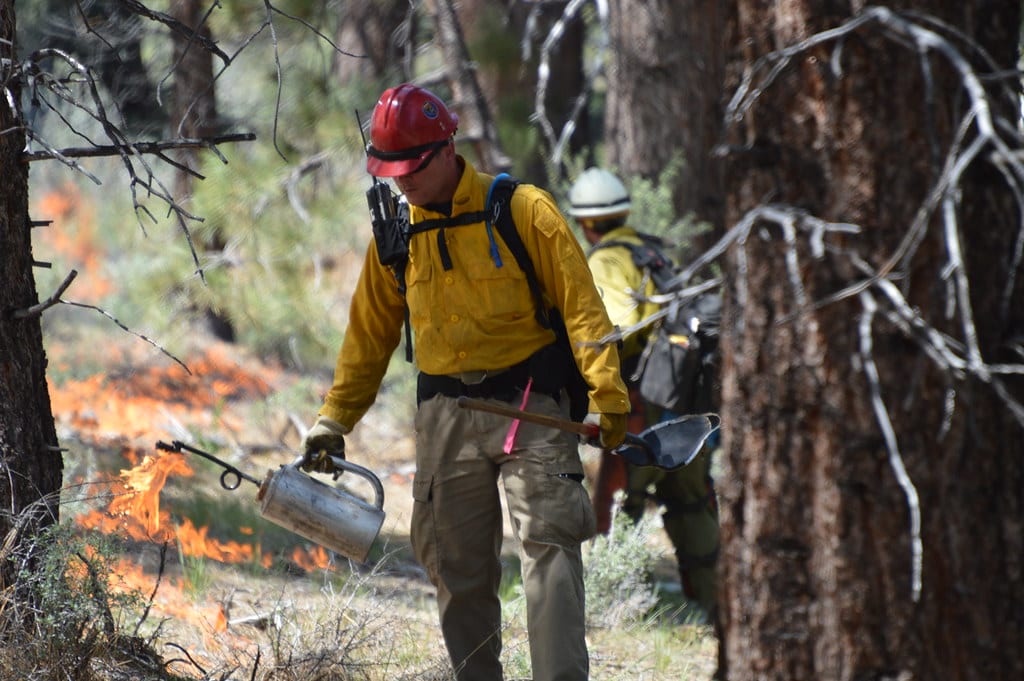
✍️ It includes articles by Canyon Hohenstein, who used to be a wildland firefighter and lived through them last summer, and Sebastián Fest, a leading Argentine journalist. We hope you enjoy it as much as we do.
📖 Today’s issue: As wildfires return to Spain, we're revisiting last year's blazes through the eyes of someone who lived them; plus, how a World Cup rivalry with Argentina spiraled into something much uglier.
🔥 Spain has always burned. Humans changed how
By Canyon Hohenstein
A flame came out of the sea and set fire to many towns and cities, and men and beasts; and that same sea set fire to rocks, and in Zamora one neighborhood, and in Carrión, in Castrojeriz, and in Burgos a hundred houses, and in Briviesca, and in Calzada, and in Pancorbo, and in Buradón, and many other towns.
The fire moved west to east across the northern Meseta, along a line three hundred kilometers long, burning through places whose names still sit on the map of Castilla y León. Nobody who survived it understood what it was.
At the time, an annalist recorded the year with two words that offered no explanation—just a verdict: anno iniquo.
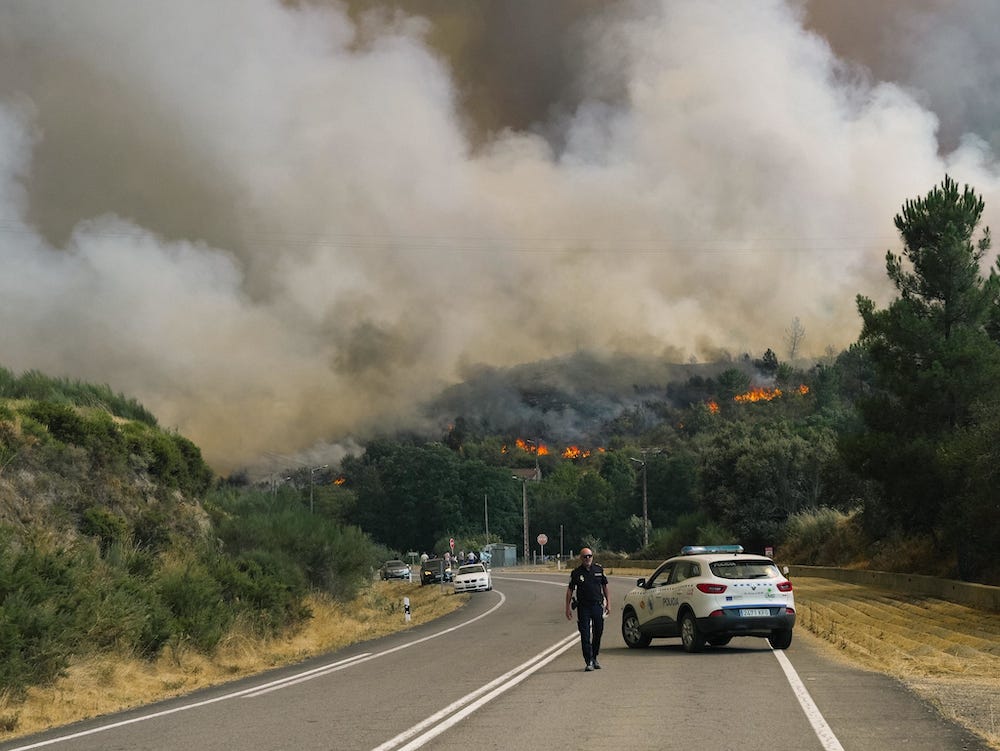
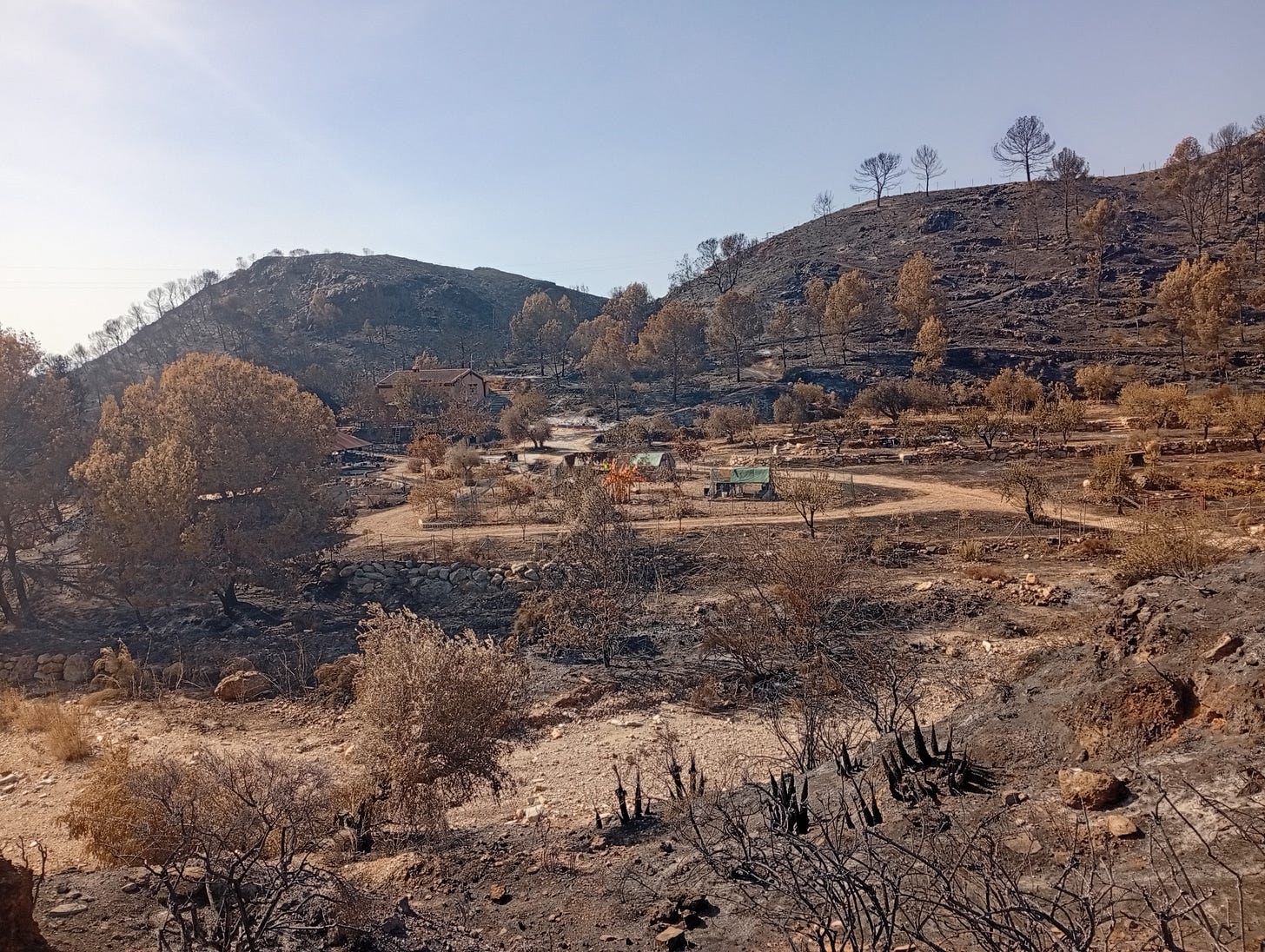
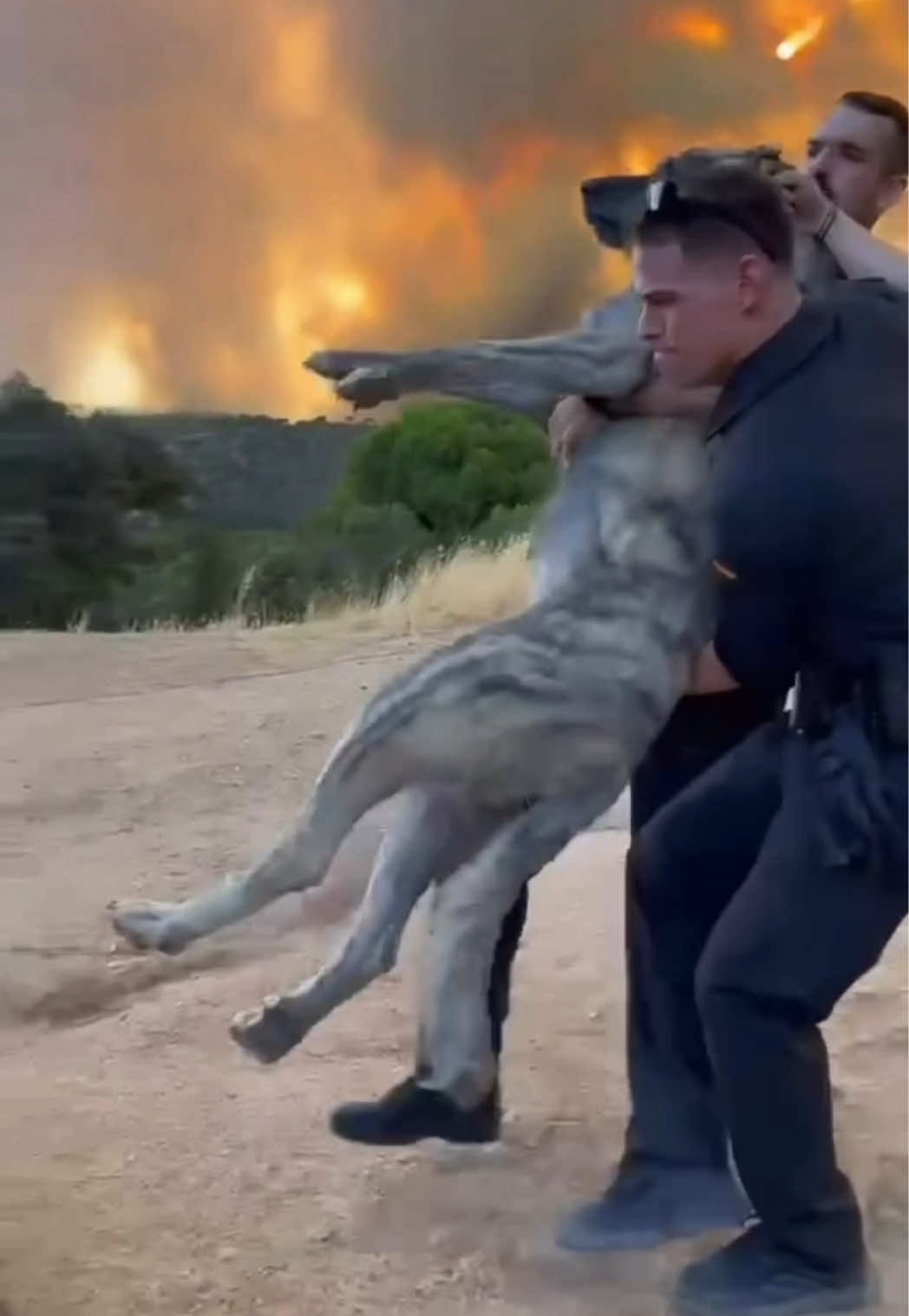
The peninsula’s 2025 wildfire season devastated the nation. From the green mountains of Galicia to the town of Tres Cantos, few areas were spared. A grey blanket of smoke settled over the rest of the land, making it hard to see and breathe.
That summer burned differently than anything in Spain’s records. Scientific terms felt insufficient to describe the devastation. Low humidity and longer fire seasons didn’t quite capture the magnitude of the fires—to witness such devastation makes one understand why an annalist referred to 949 as the evil year.
Between the 5th and 19th of August, the burned area leapt from 47,000 hectares to 367,000: ninety percent of the year’s destruction in two weeks. When it was over, Spain’s ministry of environment counted nearly 355,000 hectares gone, the most in three decades. Europe’s satellites, which sweep wider than the national survey, counted more still: 393,000 hectares, over a third of everything that burned in the entire EU.
The northwest took it worst. In Galicia, the regional government counted nearly 119,000 hectares burned, most of it in Ourense. The fire reached the Roman gold mines of Las Médulas, a World Heritage site.
The big cities weren’t immune to the fallout. A resident of Madrid said, “The smell was really strong. It was like someone had lit a bonfire outside the window, but the fire was 20 km away [in Tres Cantos].”
Statistics don’t capture the human tragedy these fires inflicted. Houses were lost, livelihoods were upended, and, worst of all, the fires killed at least eight people in Spain—among them two men named Abel and Jaime.
Abel Ramos Falagán was thirty-five, from the country around La Bañeza, in León. He ran a construction company and was vice-president of the local motorcycle club. On the second Saturday of August he was at the Gran Premio de La Bañeza, the race his club lives for.
By Monday the fire had crossed the provincial line from Zamora, and Abel and his younger brother Sergio presented themselves to the operation as volunteers, bringing a brush-clearer and machinery from their construction firm. The fire’s directors gave them the task of cutting vegetation ahead of the flames, taking fuel out of the fire’s path.
On Tuesday evening he was working the ground between Nogarejas and Quintana y Congosto with Sergio and a friend, Jaime Aparicio, thirty-seven, who kept a bar nearby. The fire had been moving all week in ways no one could predict. Two tongues of flame came together without warning and closed around the men. The call for help went out at 7:17 in the evening, from kilometer 12 of the LE-125. Abel died where he stood. Sergio survived his burns.
Jaime, burned over most of his body, was carried to the burns unit in Valladolid and lived two more days. His village, Quintanilla de Flórez, came out to bury him.
With their own equipment, these men chose to protect their homes by using the oldest tactic there is against wildfire—clearing away what burns.
To understand why Spain burns differently today, you have to leave the fireline and look at the villages. Throughout the years, people have left the country for the cities. In Spanish, it’s called España vacía—Empty Spain. Seventy percent of the country now holds only ten percent of the people.
A Spanish grandma in Madrid put it best when she said, “Of course there are lots of fires. There aren’t any more goats to eat the grass.”
The deaths of Jaime and Abel reflected more than extraordinary courage. They also reflected a countryside that increasingly has too few people to defend it. As humans have left, nature has taken over, bringing with it a boom in greenery across the country, as well as wildfires, the inevitable destruction built into the ecosystems of the peninsula.
The historian David Peterson, at the University of Burgos, found that in the first months of 950, monasteries across the Meseta produced a burst of charters documenting peasants signing away land in exchange for food. Peterson read that spike of desperate paperwork as the fire’s impact, preserved in an archive instead of in the ground.
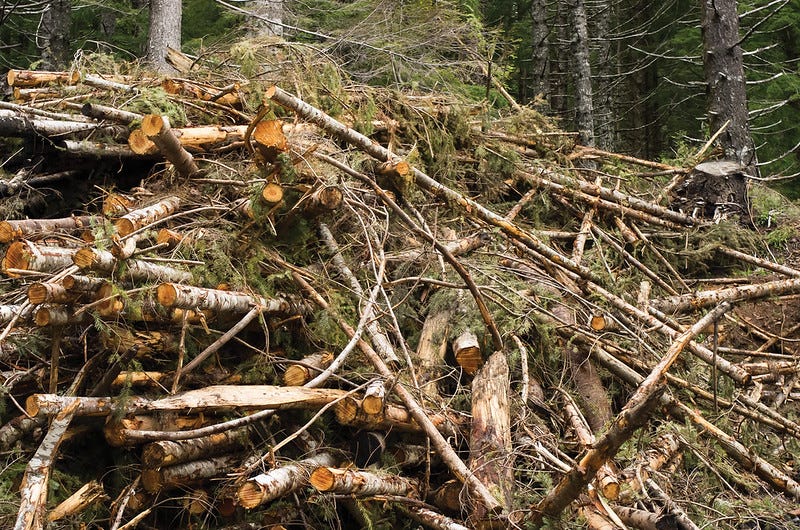
The peninsula burned in 949, he concluded, for the same reason it burns now: an overload of fuel meeting drought and wind. The medieval fuel came from the razing of forests to make way for farms and housing, leaving brush piles ready to blow up with a single lightning strike.
The human causes of the fires of 949 and 2025 are nearly opposite. The medieval fire came from clearing land; the modern ones from abandoning it. The same overload of fuels burned by the same means, but for different reasons.
There were also the natural patterns of drought and lightning strikes, as well as fires started by people. But it’s only in the modern era that humanity has altered the weather itself.
This time, unlike in 949, the causes can be measured. World Weather Attribution, the consortium that measures how much human warming loads the dice for specific disasters, examined the conditions behind the August fires across northwest Iberia—the sixteen-day heatwave, the desiccated fuels, the wind—and found that human-caused warming had made fire weather of that severity roughly forty times more likely, and about thirty percent more intense.
The heatwave itself was made hotter and longer by warming. Europe is heating at about twice the global average, drying its summers and stretching its fire seasons at both ends.
The impact of humans on wildfires resists simplicity. Our emissions enhance the factors that cause fires, while our movements to cities create more natural land where fire is unavoidable and often necessary.
Fire is native to Iberia. A thousand-year-old chronicle proves that. What’s changed isn’t that Spain burns; it’s the emptied interior, the season’s length, and who lives at the fire’s edge.
The fire of 949 became a legend because no one could bear it as a fact of nature. Three centuries later, a cleric named Gonzalo de Berceo received it fused with the omens before the battle of Simancas, the flames given a role in what the poem casts as a war between heaven and the infidels:
The south wind arose, a scalding wind, / and with it a raging, wrathful fire; / it moved from the west at the prompting of the Devil, / and wrought great evils before it was stilled.
After the Devil came a serpent. In the Poema de Fernán González, the fire crosses the sky as a dragon conjured by Moorish sorcery. After the serpent came the scholars, who decided a flame could not have come from the sea and rewrote it as an earthquake. This theory outlived them, filed to this day in Spain’s official seismic catalogue.
A thousand years of explanations, each preferring a reason to randomness: the Devil, sorcery, the shifting earth. Anything but dry fuel and wind.
Of everyone who ever wrote the fire down, the earliest annalists came closest, not because they named the cause, but because they didn’t reach for one. No serpent, no sorcery, no shifting earth. Just an evil year, and a flame so extreme it was as if it came out of the sea.
In Zamora, the hills are growing back for the second time in four years, into a countryside emptier than it was in 949, with fewer hands, fewer flocks, and more fuel. Every fire season will be different: most will be forgotten, some will be like 2025, and some will be worse.
Nobody knows what future wildfire seasons will bring, but eleven centuries of chronicles and the emptying landscapes of Spain agree on only one thing.
The fire will come again.
—
Canyon Hohenstein is a former Montana wildland firefighter turned writer, whose experience leading an inmate fire crew — and later learning their crimes — inspired Who Tames the Flames? He splits his time between Montana and Madrid and publishes the newsletter The Burn Scars We Bear.
🔔 Don’t miss the latest episode of The Bubble Podcast!
Episode 3 of The Bubble Podcast is out! We discuss the potential PP-Vox national coalition with political scientist Pablo Simón and whether it’s easy for foreigners to make friends in Spain.
Subscribe and listen on Spotify, Apple Podcasts, and YouTube!
⚽️ Argentina, Spain and the manufactured outrage machine
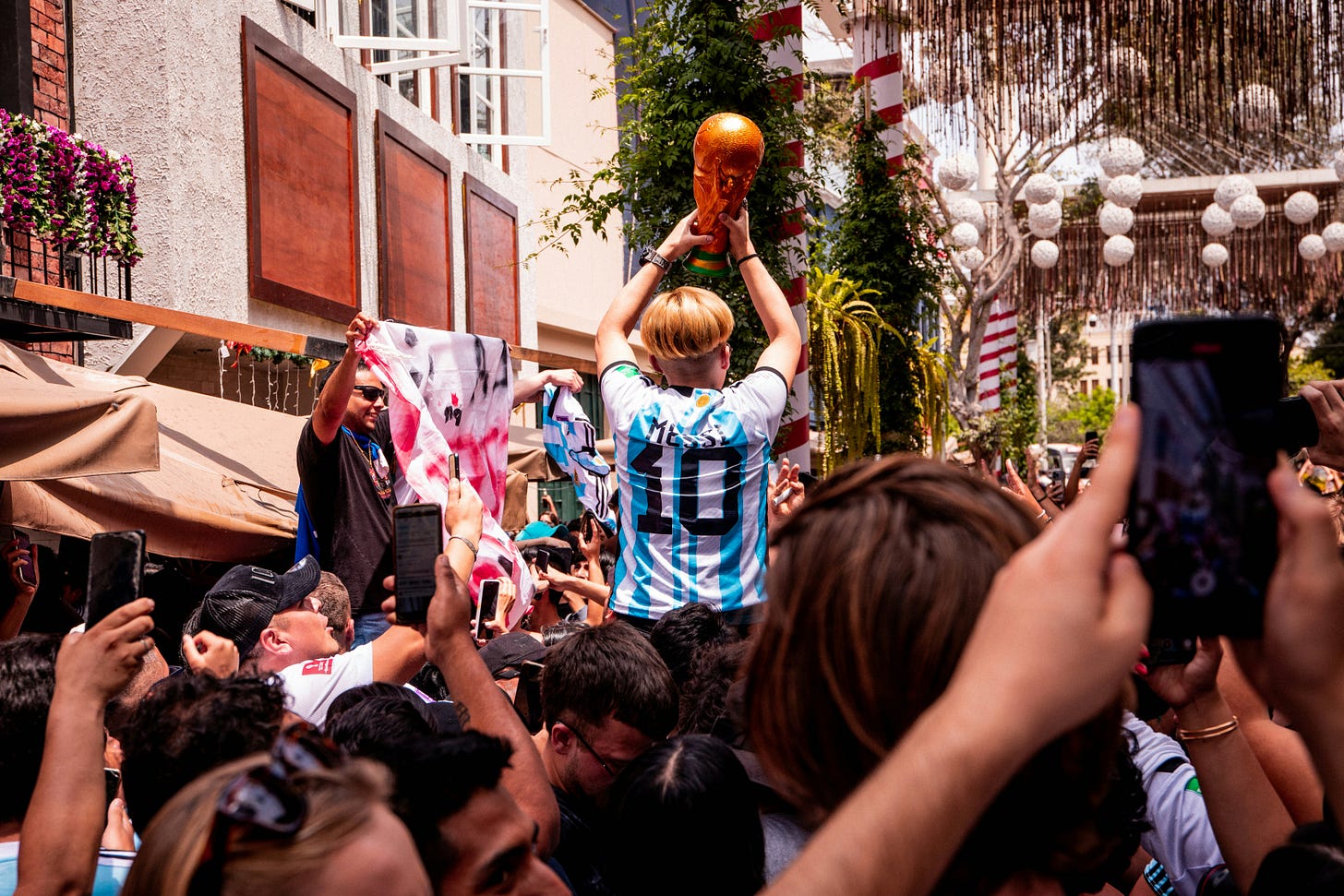
Are Argentines out of their minds? What were those people doing in the middle of the night in Madrid’s Plaza Mayor, singing “el que no salta es español” (”whoever doesn’t jump is a Spaniard”)? Weren’t many of the people jumping probably Argentines in the process of getting Spanish citizenship?
Since last Sunday, you’ve probably noticed an explosion in videos on social media criticizing Argentina after the World Cup defeat, with people calling them sore losers, racist, and unbearably whiny. You’ve also probably seen countless posts from Argentines mocking Spain (and the rest of the world) for “not knowing how to celebrate”, for being “jealous” of them, or for making fun of Argentina’s lackluster performance.
What started as a sports rivalry soon evolved into a full-blown cultural war in a matter of hours. Politicians and journalists got involved. Things got personal, then offensive. Within days, it stopped being about football at all — to the point where some people in Argentina called for boycotting Rosalía live shows, while Argentines living in Spain went on live TV in Buenos Aires to say they were “afraid” to walk the streets of Madrid.
But no, Argentines aren’t crazy — they’re just… Argentine: passionate, witty, sometimes haughty, often generous, and invariably allergic to submission. They may want a Spanish passport, sure, but before that there’s something more important: the national team jersey.
And since the dogma that politics and sports don’t mix is one of the most consistent falsehoods in history, it has to be said that Spain’s 1-0 win over Argentina in the World Cup final hides some very bad news for far-right Vox leader Santiago Abascal — and, by direct consequence, for socialist Prime Minister Pedro Sánchez.
“How many of these (Argentine) hooligan fanatics are going to get the right to vote under Sánchez’s new scheme?” a reader wondered recently, commenting on an article I recently published on El Mundo about Messi’s silence after the World Cup defeat and attacking the (now) controversial Democratic Memory Law (aka Grandchildren’s Law.)
The answer is simple: all those who’ve obtained Spanish nationality get to vote, with one important caveat that sounds obvious but isn’t quite so simple. Only those who registered in time — and who actually vote — will vote. And historical experience shows that turnout among Spanish residents abroad rarely exceeds ten percent of the total.
The law will indeed allow 1.1 million Argentines to obtain Spanish nationality as descendants of Spaniards. But no matter how much Abascal might wish otherwise, those Argentines won’t vote en masse for Sánchez out of gratitude for the “gift” of citizenship. They’re too proud to thank someone for what they consider a right. So the bad news for Abascal and Vox is bad news for Sánchez too. As is typical in established democracies, votes aren’t bought — they’re earned.
That being said, let’s talk about football (aka soccer) and about Argentina, the global scapegoat of this week.
In the last few days of the World Cup (especially right before the match with England), Argentina was the target of a campaign fueled by the momentum of social media algorithms, which then grew organically — and certain Argentine attitudes definitely helped fuel it too.
But the accusation of Argentina being a racist country — perhaps one of the most racist in the world, in actor Samuel L. Jackson’s words — is untenable. Lastly, Spaniards and Argentines won’t fall out of love with each other over what happened at the World Cup or in a Madrid metro station.
Let’s take this one piece at a time.
Agustín Giménez, a specialist in sports marketing, AI, and digital business, was recently interviewed by Argentine newspaper La Nación and said that “the origin of the wave of insults and accusations against Argentines isn’t 100% organic, though the scale it reached was.”
It’s important to understand that these days a campaign doesn’t need to be big or expensive: a small core of accounts is enough to coordinate the launch, because the heavy lifting is done for free by the algorithm.
“All it takes is planting the outrage; the platform harvests and distributes it. Argentina generated 23.7 million posts on X in a single week — 49% more than Spain, the actual champion. That volume isn’t produced by any paid operation; it’s produced by the system once the fuse is lit,” Giménez explained.
“The first pushes came from an identifiable group of accounts, many of them recently created, with no history of following football, posting the same hashtags and edited videos simultaneously. That’s not the behavior of angry fans. It’s the classic pattern of an amplification operation,” he added.
Who benefited from the campaign? First, the very accounts that managed to make their content go viral, since X pays users for engagement with their posts through a revenue-sharing program. And then, the betting houses.
“It was striking how many sponsored accounts, or accounts linked to second- or third-tier betting houses, were at the initial nodes of this campaign. What that proves is that hatred toward Argentina had several business models running on it at the algorithmic level, and none of them had any incentive to stop it,” he said.
Did Argentina behave badly in the final? Rough or aggressive play is part of football and is managed by the referee, who has several tools available — the warning, the yellow card, the red card, plus VAR, which turned football into a different sport than the one we used to know.
In any case, what needs to be examined is the behavior after the match. Leandro Paredes, who at the end of the World Cup final went after Spain’s Eric García, putting a hand on his throat, still owes an apology, though the provocations started almost simultaneously on both the Spanish and Argentine sides. There are no saints in this story, but the problem with Paredes was his disproportionate reaction.
Was Argentina wrong to turn its back on Spain while celebrating the title with the trophy raised? FIFA doesn’t have a clear protocol for these situations — so much so that Gianni Infantino himself had to drag Donald Trump off the podium so the images could immortalize the Spaniards, no matter how much the US president claims to know about football (a claim he has yet to demonstrate).
Argentines — and not only them, but much of Latin America — experience football with a passion and visceral intensity that isn’t the norm in Europe. They had just lost a dramatic final after a fabulous tournament, and they were thanking their fans, crying alongside them. Could Messi, as captain and practically an honorary Spaniard, have told his teammates to turn around for a moment and applaud the champions? Yes — but then he wouldn’t be Messi.
Could some senior official from the Argentine Football Association (AFA) have stepped in and alerted the players? Yes — but then it wouldn’t be the AFA.
Two more things: if you look at previous World Cup finals, it isn’t standard for the losing team to stay and applaud the champion. Just look at what happened with France in Qatar 2022.
And something fundamental: this is football, in a massive, deafening stadium — not the Wimbledon final, where the loser competes with the winner over who gives the most gracious, polite speech.
Now, brace yourself, because here’s the big one: is Argentina a racist country?
The first thing that needs to be said is that judging other countries through the lens of your own leads to prejudice. To put it plainly: the history of the United States, France, or Brazil is not the history of Argentina, a country whose economy and growth were not built on slavery.
Argentina decreed freedom of wombs in 1813, even before becoming an independent nation: all children born to enslaved women from that point on were free (though subject to a certain form of guardianship). And in 1853, its National Constitution established that “in the Argentine Nation there are no slaves: the few that exist today become free from the swearing-in of this Constitution...”
The United States abolished slavery ten years later, but it wasn’t until 1864 that it ended all racial segregation laws.
For all its flaws, that never happened in Argentina, where once slavery was abolished, there was never legal racial segregation.
Does this mean there’s no racism in Argentina? Of course there is — but the national football team isn’t a reflection of it, beyond Erika Denise Edwards’s December 2022 piece in the Washington Post, an article that led to a false debate. The real question isn’t that one, but rather why there are so few Black people in Argentina.
Why is that? Because the Viceroyalty of the Río de la Plata didn’t have a slavery-based economy, because far fewer enslaved people arrived in that territory than in the United States, and because the country was built on a massive wave of immigrants from Spain, Italy, France, Germany, Ukraine, Russia, Poland, Switzerland, Greece, Syria, Lebanon, and many others — to the point that, by the early twentieth century, more than half of Argentina’s population was foreign-born rather than of Black descent.
This piece by Martina Jaureguy in the Buenos Aires Herald shows that Black Argentines have a very different view than the one circulated in the Global North.
Two more facts, before we wrap up: Argentina had a Black World Cup champion, Héctor Baley, the backup goalkeeper on the 1978 World Cup–winning squad. Baley was — and still is — nicknamed “Chocolate” or “Negro,” to this day terms of endearment widely used in Argentina. And he swears he never felt discriminated against. It may be hard to grasp, but the best way to understand complex issues is to open your mind to other realities instead of boxing yourself into your own. The result can be surprising — as surprising as what has always happened on thousands of big and small football fields across Argentina: when a goal is scored, Jewish players and players of Arab descent on the same team embrace to celebrate. And that, for now, hasn’t been changed even by Javier Milei’s devotion to Benjamin Netanyahu.
Argentina, however much it might upset Samuel L. Jackson, is historically a model of immigrant integration.
“Argentines are born wherever they want” is a phrase you hear often, reflecting how easily a Venezuelan, a Frenchman, a Brazilian, a Chinese person, an American, or a Swede is embraced by — and lets themselves be embraced by — an eternally curious society, drawn to what happens in the rest of the world, and honored that people choose it as their home.
That’s why the idea of some clash between Argentines and Spaniards doesn’t hold up. It’ll give plenty of professional and amateur journalists material to fill their columns, dictated by the algorithm. But it won’t amount to more than that.
—
Sebastián Fest is an Argentine journalist born in Buenos Aires, currently serving as the Southern Cone correspondent for Spain's El Mundo. He previously headed sports coverage at DPA news agency and La Nación, has covered every World Cup and Olympics since the mid-1990s, and is the author of several books, including Messiánico, a biography of Lionel Messi.
If you’re not following us on TikTok yet, you’re missing out. We’re posting exclusive content with our collaborators across Spain, breaking news updates, and pop culture coverage. Click on the post above and come hang with us!
🙏 Once again, please remember to share this newsletter with your friends on social media. The more we grow, the more information we’ll be able to offer each week.